
Why Your Texts to a Coworker Could Impact Your Alimony Claim
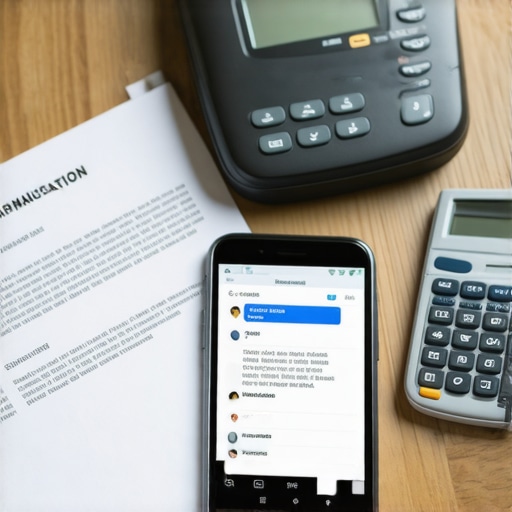
How Your Text Messages to Coworkers Can Destroy Your Alimony Award
I smell the strong black coffee on my desk before I even look at the client sitting across from me. They always look the same. They are nervous, fidgety, and convinced that their private life is actually private. I have to be the one to tell them that their case is failing before they even finish their first sentence. You want to get a divorce and walk away with a comfortable spousal support package. You think you are entitled to it. But I just saw the preliminary discovery results, and those late-night texts to your office ‘friend’ just turned your alimony claim into a liability. I watched a client lose their entire claim in the first ten minutes of a deposition because they ignored one simple rule about silence. They thought they could outsmart the divorce attorney on the other side. They were wrong. Digital evidence does not lie, and it does not have a change of heart on the witness stand.
The digital paper trail that kills alimony
Alimony claims are often forfeited when text messages to coworkers establish cohabitation or marital misconduct. A divorce attorney uses electronic discovery to prove financial independence or adultery. These digital records serve as admissible evidence that can permanently alter spousal support awards during a divorce. Procedural mapping reveals that the moment you hit send, you have created a permanent record that is subject to a subpoena. In most jurisdictions, spousal support is predicated on the ‘need’ of one party and the ‘ability to pay’ of the other. If your texts reveal that you are actually sharing expenses with a new partner or that you are planning to quit your job to maximize your claim, you are handing the defense a loaded gun.
“Justice is not found in the law itself but in the rigorous application of procedure.” – Common Law Maxim
The law does not care about your intentions; it cares about the evidence. When you get a divorce, your divorce lawyer will tell you that the burden of proof often shifts the moment a contradictory text message surfaces. We are talking about the microscopic details of your daily interactions. Every ‘good morning’ text and every ‘I can’t wait to see you’ becomes a line item in a forensic accountant’s report. This is not about morality. This is about the cold, hard math of litigation.
[IMAGE_PLACEHOLDER]
How discovery turns your private life into evidence
Discovery rules in a divorce allow a divorce lawyer to request full forensic images of mobile devices and social media archives. This legal process includes interrogatories and requests for production that specifically target electronic communications with coworkers. Case data from the field indicates that digital evidence is now the primary driver of settlement negotiations. You might think your coworker is your ally, but when they are served with a subpoena duces tecum, their loyalty usually evaporates. They will hand over their phone to avoid a contempt of court charge. Your divorce attorney can only protect you if you are honest about what is on that device. The Electronic Communications Privacy Act provides some protections, but those protections are thin when it comes to civil litigation where marital misconduct is alleged. While most lawyers tell you to sue immediately, the strategic play is often the delayed demand letter to let the defendant’s insurance clock run out, but in divorce, the strategic play is total digital lockdown. If you are getting a divorce, you must treat your phone like a crime scene.
The myth of the deleted message
Deleted texts are rarely gone because cloud backups and metadata remain accessible to a skilled divorce attorney or forensic expert. Recovering deleted data is a standard part of the divorce process when alimony is at stake. The court views the intentional deletion of messages as spoliation of evidence. Procedural mapping reveals that judges take a very dim view of parties who try to ‘clean’ their phones before a deposition. If the judge determines you destroyed evidence, they can issue an adverse inference instruction. This means the court will assume the deleted messages contained exactly what your spouse’s divorce lawyer claims they did. I have seen alimony awards slashed by 70 percent simply because a party was caught lying about their text history. It is not just the content of the message that matters; it is the timestamp, the geotag, and the frequency of the communication.
“The attorney client privilege does not extend to communications shared with third parties or those intended for public view.” – ABA Model Rules of Professional Conduct
Your texts to a coworker are not privileged. They are public record the moment a lawsuit is filed.
Why your coworkers are the defense’s best witnesses
Coworkers often become involuntary witnesses in a divorce because they possess firsthand knowledge of your lifestyle and spending habits. A divorce lawyer will depose colleagues to confirm cohabitation or extramarital relationships that negate an alimony claim. Your office environment is a goldmine for the opposing side. They aren’t just looking for affairs. They are looking for evidence that you are living a lifestyle that contradicts your financial affidavits. If you are telling the court you are destitute and need spousal support, but your texts to your coworker discuss your new designer handbag or your upcoming vacation, your credibility is dead. In the courtroom, credibility is the only currency that matters. Once you lose it, you never get it back. The divorce attorney across the aisle will use your own words to paint you as a fraud. They will subpoena your Slack messages, your Microsoft Teams logs, and even your LinkedIn DMs. No platform is safe.
The financial cost of emotional venting
Emotional venting to coworkers via text can be interpreted as admission against interest in a divorce case. When you get a divorce, these outbursts serve as evidence of marital breakdown or financial concealment. Your divorce lawyer has to spend hours explaining away your angry rants, which increases your legal fees. Every minute I spend filing motions in limine to keep your text messages out of the record is a minute you are paying for. It is an expensive way to blow off steam. The ROI on litigation drops every time you send a text that needs to be defended. You are literally paying to destroy your own alimony. Case data from the field indicates that the most successful alimony recipients are the ones who remained silent throughout the litigation. They didn’t vent to the HR department. They didn’t complain to the intern. They kept their business in the courtroom and out of the inbox.
Tactical silence and the preservation of claims
Tactical silence is the most effective way to protect an alimony claim during divorce. A divorce attorney advises limited communication to prevent the creation of evidence that could be used by a divorce lawyer to deny support. This is about risk management. You need to view every communication as a potential exhibit. If it doesn’t help your case, don’t send it. If you get a divorce, you should assume your spouse’s lawyer is reading over your shoulder. The Final Verdict is simple. Your texts are not just words. They are financial documents. They are testimony. They are the architects of your financial future. If you can’t be silent, you can’t be supported. Put the phone down, drink your coffee, and let your attorney do the talking.”