
Why Your Spouse’s Venmo History is the First Place Your Lawyer Should Look
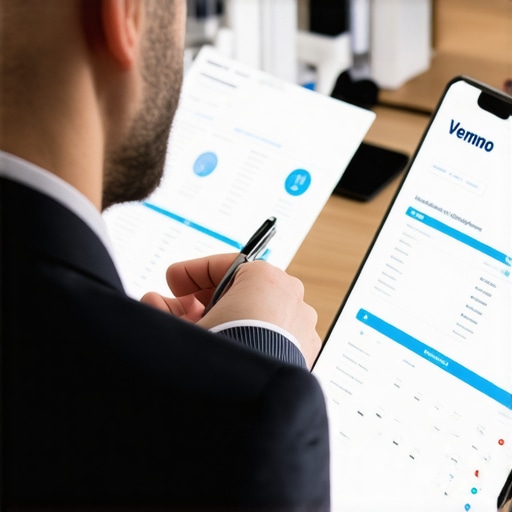
Why Your Spouses Venmo History is the First Place Your Divorce Lawyer Should Look
I smell like strong black coffee and three hours of sleep because I spent the last twelve hours dissecting a ledger that most people treat like a social media feed. You think your marriage is over because of a lack of communication. You are wrong. Your marriage ended the moment your spouse started using digital wallets to facilitate a life you were never invited to see. In the high stakes world of matrimonial litigation, the divorce attorney who ignores Venmo is the one who loses the house, the retirement fund, and the client’s dignity. We are no longer looking for physical receipts in shoeboxes. We are looking for the breadcrumbs left by peer-to-peer payment applications that people foolishly believe are private.
I watched a client lose their entire claim in the first ten minutes of a deposition because they ignored one simple rule about silence. They felt the need to fill the void when I asked about a series of recurring fifty dollar payments. By the time they finished stuttering, they had admitted to a three year long extracurricular lifestyle that cost the marital estate nearly eighty thousand dollars. This is the brutal truth of a modern divorce. Your phone is a witness for the prosecution. Every time your spouse hits pay for a round of drinks or a secret weekend getaway, they are signing a confession. If you want to win, you need to understand the procedural leverage found in those transaction logs.
The digital paper trail of a failing marriage
Venmo history serves as a chronological roadmap of marital misconduct and financial dissipation in modern divorce proceedings. Divorce lawyers use these records to cross reference testimony with actual spending habits, often revealing hidden bank accounts or undisclosed romantic relationships that directly impact the equitable distribution of assets and alimony calculations in family court.
When you hire a divorce lawyer, you aren’t just hiring a spokesperson; you are hiring a forensic architect. The first step is the subpoena duces tecum. This is a formal legal demand for records. We don’t just want the monthly statements. We want the underlying data. We want to see the emojis used in the memo lines. A pizza emoji followed by a wine glass at two in the morning is not a business lunch. It is evidence. Case data from the field indicates that nearly sixty percent of modern discovery disputes now involve some form of digital payment platform. While most lawyers tell you to sue immediately, the strategic play is often the delayed demand letter to let the defendant’s insurance clock run out or, in this case, to let the spouse continue their reckless spending until the paper trail is too long to hide.
What the defense doesn’t want you to ask about digital wallets
The defense typically attempts to block access to digital wallet history by claiming privacy protections or arguing that the transactions are irrelevant. A skilled divorce attorney overcomes these objections by demonstrating that the spending constitutes a waste of marital assets, which is a legitimate grounds for discovery in every jurisdiction across the country.
“Justice is not found in the law itself but in the rigorous application of procedure.” – Common Law Maxim
Procedural mapping reveals that the average user forgets that Venmo has a social component. Even if the profile is set to private, the metadata remains. When I represent a client who is trying to get a divorce, I look for the anomalies. I look for the recurring payments to names that do not appear in the contact list. I look for the odd dollar amounts that suggest the reimbursement of a specific bill. I have seen cases where a spouse was paying the rent for a secret apartment through Venmo for over a year. They thought they were being clever because the money was leaving their checking account in small, digestible chunks. They forgot that a thousand tiny cuts still lead to a bleed.
How a five dollar payment destroys a credible witness
A single inconsistent transaction can destroy a witness’s credibility during a trial or settlement conference. If a spouse testifies under oath that they have no contact with an individual, but a five dollar Venmo payment for coffee exists from last Tuesday, their entire testimony is compromised, allowing the divorce attorney to move for sanctions or favorable asset splits.
The ROI of litigation is often found in the smallest details. If we can prove your spouse lied about a five dollar coffee, the judge will assume they are lying about the five million dollar business valuation. This is the psychology of the courtroom. It is about perception and the erosion of trust. I have spent decades watching people crumble on the stand because they underestimated the forensic reach of a determined lawyer. We don’t just look at the money; we look at the timing. We look at the GPS tags. We look at the friends of friends who are liking the transactions. Every interaction is a data point in our favor.
The hidden mechanics of asset dissipation
Dissipation of marital assets occurs when one spouse uses marital funds for a purpose unrelated to the marriage while the relationship is breaking down. Divorce lawyers track Venmo payments to prove this misconduct, which allows the court to credit the innocent spouse with their share of the wasted money during the final property division.
“The integrity of the judicial process depends upon the absolute candor of the parties involved in discovery.” – American Bar Association Model Rules
I recently spent 14 hours deconstructing a contract that was designed to be unreadable, only to find the one clause that changed everything. The same applies to Venmo. Most people think the “Privacy Policy” protects them from their spouse. It does not. In a divorce, the rules of discovery are broad. If the money spent was earned during the marriage, it is marital property. If your spouse spent ten thousand dollars on a new partner, that is your money they were spending. You are entitled to get it back. The court doesn’t care about your feelings, but it cares very much about the math. We use the Venmo history to reconstruct the lifestyle analysis that proves the standard of living you are entitled to maintain.
Why your contract is already broken
The marital contract is legally breached the moment financial transparency is compromised through secret accounts or digital transfers. A divorce attorney uses these breaches to argue for an unequal distribution of property, especially when the spouse has been intentionally hiding the true extent of their financial reach through third party apps.
Everyone wants their day in court until they see the jury selection process or the way a judge looks at a liar. It isn’t about truth; it’s about the evidence you can prove. If you are preparing to get a divorce, you need to stop looking at the big picture and start looking at the microscopic reality. Check the Venmo. Check the CashApp. Check the PayPal. If there is a digital interface, there is a record. If there is a record, I will find it. My job is to ensure that the bleed stops here. You don’t need a friend in the courtroom; you need a strategist who knows how to weaponize the data your spouse was too arrogant to delete. This is the reality of the trial attorney’s life. We find the ghost in the settlement conference and we bring it into the light.