
Why Your Private Journal is Often Fair Game in Court
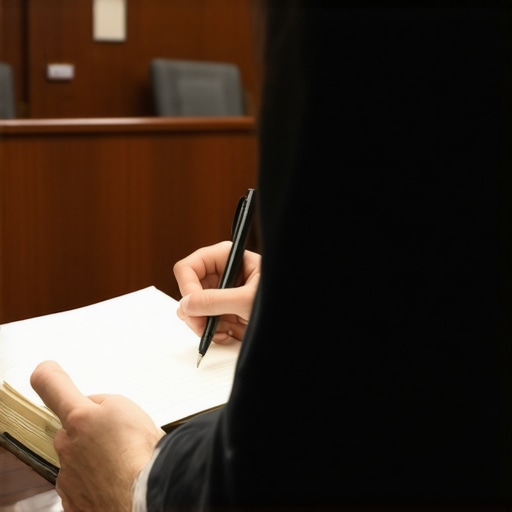
Why Your Private Journal is Often Fair Game in Court
The smell of stale black coffee fills the room while I look across the mahogany table at a client who just realized they signed away their leverage. Most people believe their thoughts are private. They think a leather-bound diary or a password-protected app is a fortress. In the world of high-stakes litigation, those pages are not a sanctuary. They are a roadmap for the opposing divorce attorney to dismantle your character. If you are preparing to get a divorce, you must understand that your self-reflection is often just unsworn testimony waiting to be weaponized. Litigation is chess, not therapy. When you write down your anger, your lapses in judgment, or your secret spending, you are effectively handing the other side a loaded gun.
The deposition disaster that killed a claim
Every written word you produce acts as a potential weapon for a divorce lawyer seeking to undermine your credibility. I watched a client lose their entire claim in the first ten minutes of a deposition because they ignored one simple rule about silence and journaling. The client had kept a detailed log of every perceived slight from their spouse. They thought they were building a case. Instead, they were documenting their own obsession and occasional instability. When the opposing counsel asked about a specific date in March, my client confidently cited their journal. Within seconds, the lawyer subpoenaed the entire book. By the afternoon, the client was forced to explain a passage where they admitted to hiding assets in a cousin’s account. The case was over before the first break. This is the reality of the courtroom. Evidence does not care about your intentions. It only cares about the ink on the page. If you are working with a divorce lawyer, you need to disclose every scrap of paper you have written on before the other side finds it first.
Why your private journal is discoverable property
Legal discovery rules allow a divorce attorney to subpoena any document relevant to the marriage or child custody. A private journal is considered a recorded recollection and is rarely protected by privacy laws once a lawsuit is filed. Courts prioritize the search for truth over personal emotional boundaries. The law functions on the principle of transparency during the discovery phase. If a document contains information regarding marital assets, parental fitness, or the timeline of a separation, it is discoverable. You cannot claim a privacy right to a diary when the contents directly contradict your testimony.
“Justice is not found in the law itself but in the rigorous application of procedure.” – Common Law Maxim
This procedural reality means that your inner monologue becomes public record. While you might feel that your journal is an extension of your mind, the court views it as a physical artifact of evidence. If you mention a hidden bank account or a weekend bender, that entry is no longer a confession. It is an admission of a party opponent under the rules of evidence.
The myth of digital privacy in modern divorce
Digital journals and password protected notes apps do not provide legal immunity during a divorce. A divorce lawyer can use forensic experts to recover deleted files or request access through a court order if they show a reasonable belief that evidence exists. Many clients believe that hitting delete or using an encrypted app keeps them safe. This is a dangerous fallacy. In the age of electronic discovery, metadata often tells a more compelling story than the text itself. If you are trying to get a divorce, assume that every text, every note, and every cloud-synced thought is accessible. Procedural mapping reveals that judges are increasingly willing to grant broad access to digital devices when there is a hint of financial or custodial misconduct. A contrarian data point that most people ignore is that the act of deleting a journal can be worse than the journal itself. Spoliation of evidence can lead to a judge assuming the deleted content was the worst possible version of the truth.
How a divorce lawyer uses your words against you
Opposing counsel looks for inconsistencies between your formal testimony and your private entries to destroy your credibility. A single sentence in a diary can be used to impeach a witness on the stand and swing the judge’s opinion. Imagine you testify that you have been the primary caregiver for your children. Then, the opposing divorce lawyer produces a journal entry from six months ago where you complain about being too hungover to make breakfast. The discrepancy is fatal. It does not matter if you were exaggerating or venting. In the eyes of the court, you are now a liar. The tactical timing of a motion to compel these documents is often saved for the moment you are most vulnerable.
“The American Bar Association emphasizes that an attorney must zealously represent their client within the bounds of the law, which includes the aggressive pursuit of relevant evidence.” – ABA Model Rules of Professional Responsibility
This means the other side is legally obligated to hunt for your journal if they think it contains the truth you are hiding.
The tactical risk of emotional venting during litigation
Writing out your anger during a legal battle creates a permanent record of your state of mind that can be used to prove malice or instability. What feels like a healthy release of emotion is actually the creation of a liability. Many therapists suggest journaling as a way to cope with the stress of ending a marriage. From a legal standpoint, this is terrible advice. If you are in the middle of a custody battle, a journal entry where you call your spouse a vile name or describe a fantasy of them disappearing can be framed as evidence of a hostile co-parenting environment. You are creating a paper trail of your worst moments. Case data from the field indicates that judges are heavily influenced by the raw, unpolished tone of personal diaries. They see it as the truth, while they see your courtroom behavior as a performance. If you want to protect your future, stop writing. Talk to your divorce attorney instead, because those conversations are protected by attorney-client privilege. Your journal is not.
Protecting your mental space without creating evidence
To protect yourself during a divorce, you must shift your communication to privileged channels and stop all informal recording of events. If you must document something, do it only at the specific direction of your divorce lawyer to invoke work-product protection. There is a narrow exception for documents created in anticipation of litigation at the request of counsel. However, this is a thin line to walk. If you start a journal on your own, it is fair game. If your divorce lawyer asks you to keep a log of visitation violations, that log might be protected as attorney-product. Even then, you should be careful. The best strategy is to assume that anything you write will be read aloud by a judge. If you wouldn’t want it on a billboard, don’t put it in a notebook. While most lawyers tell you to sue immediately, the strategic play is often the delayed demand letter while you scrub your life of unnecessary evidence and prepare for the forensic scrutiny that is coming. Your silence is your greatest asset. Use it.