
Why Your Lawyer Wants to See Your Venmo and CashApp Records
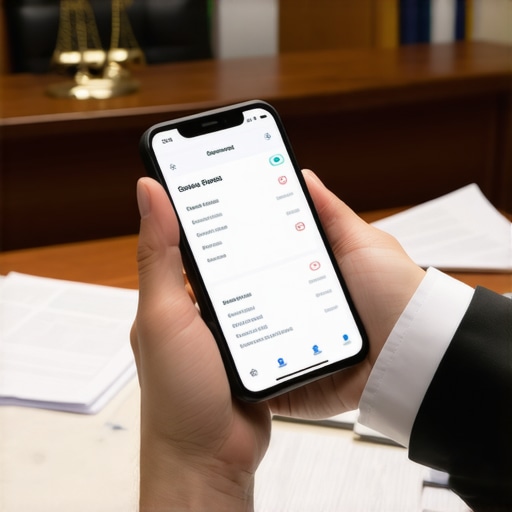
I smell like strong black coffee and I am about to tell you why your divorce case is failing before we even exchange pleasantries. You think your digital life is a vault, but to a seasoned divorce lawyer, your Venmo feed is a broadcast of your worst secrets. I watched a client lose their entire claim in the first ten minutes of a deposition because they ignored one simple rule about silence and their Venmo history. We were sitting in a sterile conference room in downtown Chicago, the hum of the HVAC the only sound, when the opposing counsel produced a printout of forty-two transactions. My client had claimed they could not afford child support increases, yet they had sent three thousand dollars to a ‘fishing buddy’ for ‘weekend supplies’ over the course of two months. That ‘fishing buddy’ was a romantic interest, and those ‘supplies’ were luxury hotel stays. The case did not just settle; it collapsed. This is the reality of modern litigation where every thumb-swipe and emoji-laden payment description is a potential piece of evidence under the microscope of a forensic accountant.
The digital ghosts haunting your settlement
Venmo and CashApp records serve as forensic evidence in divorce proceedings to track hidden assets, verify lifestyle expenses, and identify undisclosed relationships. These platforms are often the first place a divorce attorney looks when the numbers on a formal bank statement do not align with the reality of a client’s daily existence. When you decide to get a divorce, you are opening your entire financial history to the court. Digital payment apps are not exempt from discovery. In fact, they are often more revealing than traditional bank statements because they include memos, social networking links, and timestamps that provide a narrative of your behavior. If you are claiming a certain level of poverty to the court while your Venmo history shows frequent payments for high-end dining and weekend getaways, you are handing the opposition a loaded weapon. The court views consistency as the primary metric of credibility. Any deviation between your sworn financial affidavit and your CashApp history will be interpreted as a deliberate attempt to defraud the court.
Why the judge cares about your five dollar coffee
Small daily transactions on payment apps build a pattern of life that either supports or refutes your claims about income and expenses. A divorce lawyer looks for recurring payments that suggest a higher standard of living than what is reported on tax returns or pay stubs. Most people believe that five or ten dollar transfers are too insignificant to matter in a high-stakes divorce. They are wrong. These micro-transactions are the bricks that build the house of your lifestyle analysis. If I see a pattern of daily five-dollar transfers to a local barista, followed by fifteen-dollar lunch transfers, I can calculate a monthly discretionary spending habit that contradicts your claim that you are living on a shoestring budget. This is about the math of credibility. When we look at your financial life, we are not just looking for the big score or the hidden offshore account. We are looking for the truth of how you move through the world. The mundane reality of your spending is often more persuasive to a judge than a single large purchase because it shows intent and habitual behavior over time.
“Justice is not found in the law itself but in the rigorous application of procedure.” – Common Law Maxim
The discovery process is a relentless machine designed to strip away the veneer of your public persona. When your divorce attorney asks for your login credentials or a CSV export of your payment history, they are not being intrusive for the sake of curiosity. They are performing a defensive audit. We need to see what the other side is going to find before they find it. In the realm of family law, surprises are the enemy of a favorable verdict. If I know about the suspicious CashApp transfers to your cousin in Vegas, I can build a narrative to explain them. If I find out about them during a cross-examination, I am powerless to protect you. The law requires full disclosure, and the penalties for hiding assets or lying about spending are severe, including the possibility of the judge awarding a larger portion of the marital estate to your spouse as a sanction for your dishonesty.
The myth of the private transaction
Privacy settings on apps like Venmo do not protect your data from a legal subpoena or a formal request for production in a divorce case. Even if your settings are set to private, the underlying data remains a discoverable business record that the service provider must relinquish when served with a valid court order. Many clients believe that because their friends cannot see their transactions, the law cannot see them either. This is a dangerous fallacy. A divorce attorney will issue a Request for Production of Documents that specifically names electronic payment platforms. If you refuse to provide the logs, the attorney can then petition the court for a subpoena directed at the parent company, such as PayPal or Block Inc. These corporations have entire departments dedicated to responding to legal requests. They will provide the metadata, the IP addresses, the linked bank accounts, and every memo you ever wrote. There is no such thing as a hidden digital payment in a well-litigated divorce case. The only thing you achieve by trying to hide these records is the total destruction of your reputation in the eyes of the court.
How a divorce attorney uses your digital footprint
Attorneys use digital footprints to map the movement of marital funds and identify instances of dissipation, which is the intentional wasting of marital assets. If you are using marital funds to support an extramarital affair, pay for a hobby that your spouse does not know about, or squirrel away cash for a post-divorce life, your payment apps will tell the story. Dissipation is a major factor in how assets are divided. If I can prove that you spent twenty thousand dollars of marital money on a secret life, I can argue that your spouse should receive an extra twenty thousand dollars from the remaining assets to balance the scales. We look for patterns. We look for ‘off-book’ income where you might be selling items on Facebook Marketplace and keeping the proceeds in your CashApp balance instead of depositing them into a joint account. This is the forensic reality of modern divorce. We are no longer just looking at paper checks and bank books. We are looking at the digital ecosystem you inhabit every day.
“The right of a party to discover the financial status of an opponent is fundamental to the equitable distribution of assets.” – American Bar Association Section of Family Law
Every divorce lawyer has a story about a client who thought they were being clever. They used CashApp to pay their rent to a friend to make it look like they had no assets, only for us to find the friend’s social media post thanking the client for the ‘investment’ in their new business. The transparency of the modern world is a nightmare for the dishonest litigant but a goldmine for the strategist. We use the timestamps on your transactions to verify your location. If you said you were at work but your Venmo shows you paying for a beer at a stadium across the state, your credibility is gone. Once a judge catches you in one lie, they will assume everything else you say is a fabrication. This is why the tactical play is always total transparency with your counsel. We are the ones who have to fix the mess, but we can only fix what we can see.
The specific mechanics of a digital subpoena
A digital subpoena for payment records involves a formal legal demand sent to the platform’s compliance department, requiring the release of all transaction history and account details. This process is governed by specific state and federal rules of civil procedure that dictate how electronic evidence must be handled and authenticated. When we send a subpoena to a company like Venmo, we are not just asking for a list of names. We are asking for the raw data. This includes the source of the funds, the destination, the device IDs used to make the transfers, and any communication associated with the account. The procedural zooming required here is intense. We have to ensure the chain of custody for this evidence is pristine so it can be admitted in court. If the defense tries to claim the records are forged or incomplete, we use the metadata provided by the corporation to prove their authenticity. This is not a task for a general practitioner. It requires a divorce lawyer who understands the intersection of technology and the rules of evidence. [IMAGE_PLACEHOLDER] The technical nature of these records means they are often indisputable. You cannot argue with a server log that shows exactly when and where a transaction occurred.
Why your settlement rests on a CSV file
The ability to aggregate and analyze transaction data in a CSV format allows lawyers to perform complex financial modeling that can make or break a settlement negotiation. By importing your CashApp and Venmo history into specialized software, we can create heat maps of your spending and identify anomalies that suggest hidden accounts. This is where the ROI of litigation is found. If I can spend three hours analyzing your data and find fifty thousand dollars in hidden transfers, the value of my services is clear. We are looking for the ‘bleed’ in the marital estate. Often, the settlement is reached not because of a grand moral victory, but because one side realizes the other side has the receipts. Literally. When we present a spreadsheet that accounts for every dollar spent over the last three years, the room usually goes quiet. That is the moment the leverage shifts. The strategic play is often the delayed demand letter, letting the defendant’s insurance clock or their own sense of security run out while we gather this data in the background.
Protecting your future through radical honesty
Total financial transparency with your divorce attorney is the only way to ensure your legal strategy remains viable throughout the litigation process. You must treat your lawyer like a surgeon. You would not hide a pre-existing condition from the person about to operate on you. Do not hide your digital transactions. If you have made mistakes, tell us. We can frame a mistake; we cannot frame a lie. The goal is to reach the end of the process with your assets protected and your future secure. That requires a clinical, cold-eyed look at your finances. Stop thinking about these apps as ‘personal’ or ‘private.’ In the eyes of the law, they are just another ledger. If you are preparing to get a divorce, your first step should be to download every transaction log you have and hand it over to your counsel. It might be painful, and it might be embarrassing, but it is the only way to win. The courtroom is a territory, and in that territory, information is the only currency that matters. Final thoughts for the record: the digital trail you leave today will be the evidence that defines your life tomorrow. Be careful what you click.