
The Problem With Splitting the Family Dog in a Custody Case
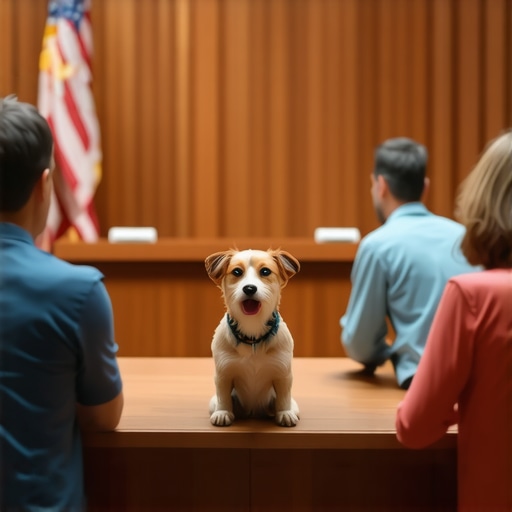
The smell of strong black coffee is the only thing that keeps this office running when people start crying about their Labradoodles. I have been a trial attorney for twenty-five years and I can tell you that your emotions are your biggest liability. You want to talk about soulmates and companions. I want to talk about who paid the 2022 invoice at the veterinary clinic and whose name is on the microchip registry. In the eyes of the law, your dog is no different than the mid-century modern credenza in your dining room. It is a piece of property. If you cannot accept that cold hard fact, you have already lost. The court does not care about your feelings. It cares about titles, receipts, and the specific statutory framework of your jurisdiction. This is not a Hallmark movie. This is a litigation theater where the person with the best paper trail wins.
The property trap in modern divorce
Divorce lawyers and judges traditionally view animals as personal property or chattel. When you get a divorce, the court seeks to divide assets based on ownership rules. A divorce attorney must focus on purchase contracts, adoption papers, and financial maintenance records to secure a win for their client in court. I watched a client lose their entire claim in the first ten minutes of a deposition because they ignored one simple rule about silence. They were asked who took the dog to the vet. Instead of giving a name, they started a long-winded story about their work schedule. Within five minutes, they had admitted on the record that the other spouse handled every medical emergency for three years. Case over. They talked themselves right out of ownership because they could not handle ten seconds of silence. They felt the need to fill the air with justifications. In litigation, silence is your shield. When you break it, you bleed. This specific failure is common among people who think the judge will decide based on who the dog loves more. The judge does not interview the dog. The judge interviews the documents.
Why the court views your dog as a chair
Divorce proceedings in most states still follow the strict classification of animals as inanimate objects for the purpose of distribution. While some progressive states like California and New York have introduced best interest of the animal standards, the majority of the country still treats Fido like a toaster. If you get a divorce in a property state, your divorce attorney has to prove that the animal was a pre-marital asset or was purchased with separate funds.
“Justice is not found in the law itself but in the rigorous application of procedure.” – Common Law Maxim
This procedural reality means that if you brought the dog into the marriage, you have a strong claim. If the dog was acquired during the marriage, it is community property. The nuance here is the forensic trail of the dog’s life. I look for the credit card statements. I look for the Amazon history of who bought the expensive organic kibble. If your spouse’s name is on the recurring delivery for the dog food, you are in a defensive position. While most lawyers tell you to sue immediately for custody, the strategic play is often the delayed demand letter. You wait until the reality of solo pet ownership hits the other spouse. You wait until they realize they cannot go on a vacation or a date without paying for a sitter. That is when you strike with a settlement offer that trades the car for the dog. Litigation is about leverage, not just law.
The statutory evolution of animal welfare
Divorce lawyers are beginning to see a shift in how certain jurisdictions handle these cases, but do not rely on it. A divorce attorney in a state with new animal welfare statutes will still rely heavily on the primary caretaker doctrine. When you get a divorce, you must be prepared to show a log of daily activities that prove you are the functional owner. This means the time of the morning walk, the frequency of grooming, and the specific brand of heartworm medication used.
“The legal status of a pet as property remains the bedrock of American jurisprudence, even as equitable considerations emerge.” – American Bar Association Journal
This shift towards equity is a slow grind. You cannot walk into a courtroom expecting the judge to care about your pet’s anxiety. You have to show that your spouse’s home is unsuitable. You show the lack of a yard. You show the ten-hour work days they spend away from the house. You use their own career success against them. If they are a high-powered executive, they are a low-powered pet owner. That is the brutal truth of the trade-off. We use their depositions to pin down their schedule. If they admit they travel three weeks out of the month, they have just signed over the dog. It is a cold, clinical extraction of the facts.
How to document the primary caretaker role
Divorce litigation requires an obsession with the mundane details of life. To get a divorce and keep your pet, you must build a file that is three inches thick before the first motion is even filed. Your divorce attorney needs the history of every flea treatment for the last five years. Case data from the field indicates that the party who can produce a comprehensive medical history for the pet usually wins the ownership dispute. It shows a level of investment that the other side cannot replicate. We look for the microchip registration. If that chip is in your spouse’s name, we have a problem. We need to find a way to discredit that registration. Maybe you paid for the registration fee from a joint account? Maybe the contact email is yours? Every single line of data is a territory that must be defended. We do not just look at the dog. We look at the dog’s life as a series of transactions. Who paid the city license fee? Who signed the boarding contract when you both went to Hawaii? If your signature is missing from those documents, you are fighting an uphill battle in the dark.
The evidence that wins the house and the hound
Divorce lawyers know that the house and the pet are often linked in the mind of the judge. If you are asking for the family home, keeping the pet is a natural extension of that request. When you get a divorce, the logistics of the pet’s life become a chess piece. Your divorce attorney will argue that moving the pet from its familiar environment is detrimental to the animal’s well-being. This is where we use the procedural mapping of the property to our advantage. We show the fenced-in yard. We show the proximity to the dog park. We show the relationship with the neighbors’ dogs. We create a reality where the dog is part of the real estate. It is a tactical move to ensure the pet stays where it is most comfortable, which just happens to be with you. Do not let the other side frame this as a custody battle. Frame it as a stability issue. The law rewards stability and punishes chaos. If your spouse is moving into a studio apartment that doesn’t allow pets, the case is already won. But you have to prove that apartment’s policy. You have to subpoena the lease agreement. You have to be thorough. You have to be ruthless. The courtroom is not a place for the weak of heart or the poorly organized. If you want the dog, prove you deserve it with paper, not tears.