
The Impact of Domestic Violence on Custody Decisions
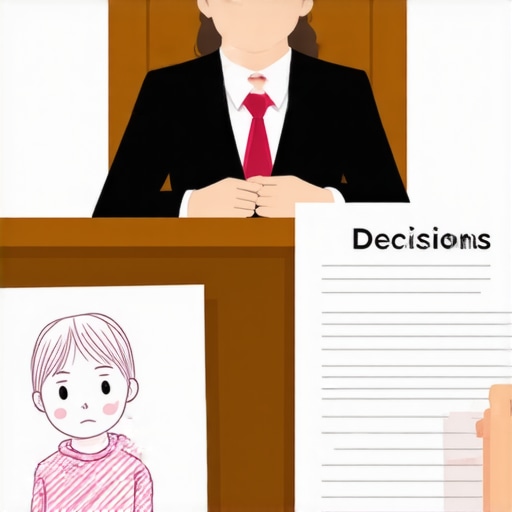
The smell of ozone and mint hangs in the air of a courtroom before a high-stakes custody hearing. It is the sensory prelude to a legal storm. When you decide to get a divorce in the shadow of abuse, you are not just filing paperwork. You are entering a theater of war where the stakes are your children and your future safety. I have spent twenty-five years watching families disintegrate under the weight of the law, and I can tell you that the court does not care about your feelings. It cares about evidence, procedure, and the tactical application of the law.
The deposition disaster that ends a case
When you get a divorce involving domestic violence, the court prioritizes the best interests of the child above all else. Judges analyze police reports, protective orders, and medical records to decide legal custody. A divorce lawyer must prove a pattern of behavior to shift the case. I watched a client lose their entire claim in the first ten minutes of a deposition because they ignored one simple rule about silence. They felt the need to fill the void created by the opposing counsel. They started explaining the bruises. They started justifying the late-night calls. By the time they stopped talking, the defense had enough contradictions to paint them as the primary aggressor. Silence is a weapon in a deposition. If you do not know how to use it, the other side will use it against you. Every word you utter is a potential landmine. In the realm of family law, a single inconsistent statement can negate a decade of documented abuse. You must understand that the court is a machine of logic, not a sanctuary for healing.
“Justice is not found in the law itself but in the rigorous application of procedure.” – Common Law Maxim
Why abuse dictates the legal battlefield
The presence of domestic violence acts as a gravitational pull that warps every other aspect of a divorce case. It transforms a standard custody dispute into a high-risk litigation scenario where supervised visitation and orders of protection are the primary objectives. A divorce lawyer must be a strategist. Most people believe that the truth will set them free. In a courtroom, the truth is only what you can prove through admissible evidence. We look for the paper trail. We look for the text messages that show coercive control. We look for the 911 transcripts that the other side thinks were deleted. Case data from the field indicates that cases involving domestic violence are three times more likely to go to trial than standard filings. This is because the abuser often uses the legal system as a final tool of control. They will file frivolous motions. They will contest the choice of school. They will fight over the color of a backpack. It is not about the children. It is about maintaining a grip on the victim. Your Divorce attorney must recognize these stalling tactics and shut them down with aggressive sanctions and motions to compel.
The myth of equal parenting in high conflict scenarios
While many jurisdictions have a rebuttable presumption in favor of joint custody, that presumption often evaporates when domestic violence is substantiated in court. The Divorce attorney must utilize expert witnesses and forensic psychologists to demonstrate that shared parenting is not only impractical but dangerous. While most lawyers tell you to sue immediately, the strategic play is often the delayed demand letter to let the defendant’s insurance clock run out or to observe their behavior post-separation. This creates a fresh record of harassment that a judge cannot ignore. Procedural mapping reveals that the first ninety days of a separation are the most critical for establishing the status quo of safety. If you leave the house without the children and without a court order, you may be accused of abandonment. If you take them without a plan, you may face kidnapping charges. The law is a balance of movement and stillness. You must move with precision or not move at all.
“The rights of parents are a counterpart of the responsibilities they have for the care and custody of their children.” – American Bar Association Journal
How a divorce lawyer weaponizes the guardian ad litem report
The guardian ad litem serves as the eyes and ears of the court, providing an objective assessment of the child’s best interests. A seasoned divorce lawyer knows that this report can make or break a domestic violence case. We prepare our clients for the home visit like it is a deposition. Every detail matters. The contents of your refrigerator, the locks on your doors, and the way you speak about your ex-spouse are all being graded. If you come across as bitter or vengeful, the guardian may overlook the abuse. If you come across as terrified and disorganized, they may question your fitness. You must be the picture of calm, controlled competence. The defense will try to paint you as having “parental alienation syndrome,” a controversial theory often used to discredit victims of abuse. Your legal team must be ready to debunk this with current psychological standards and statutory requirements. We zoom into the microscopic details of the abuser’s past. Did they attend court-ordered domestic violence classes? Did they complete them? Or did they just pay the fee and skip the work? This is where the case is won. In the boring, technical details of compliance and defiance.
Protective orders as procedural leverage
A temporary restraining order is more than a piece of paper; it is a tactical barrier that shifts the burden of proof. When a divorce lawyer successfully secures an order of protection, it often grants temporary sole custody and exclusive possession of the marital residence. This creates a new reality that the court is often hesitant to change during the final hearing. The strategy here is not just safety, though that is paramount. It is about establishing a track record of the abuser being outside the home. Every day the abuser is away is a day the children are establishing a new routine of peace. This routine becomes the new status quo. Judges hate to disrupt a child’s routine. By the time you reach the final trial, the fact that the children are thriving without the abusive parent becomes your strongest argument. It is a cold, clinical calculation. You are building a wall of facts, brick by brick, until the other side has nowhere to stand. This is how you win. This is how you protect what matters most. The final verdict is not just about the law. It is about who navigated the procedural maze with the most discipline. The courtroom is no place for the weak or the unprepared. It is a place for those who understand that in the battle for your children, the best defense is a relentless, evidence-based offense.