
The Common Mistakes Parents Make in Courtroom Testimony
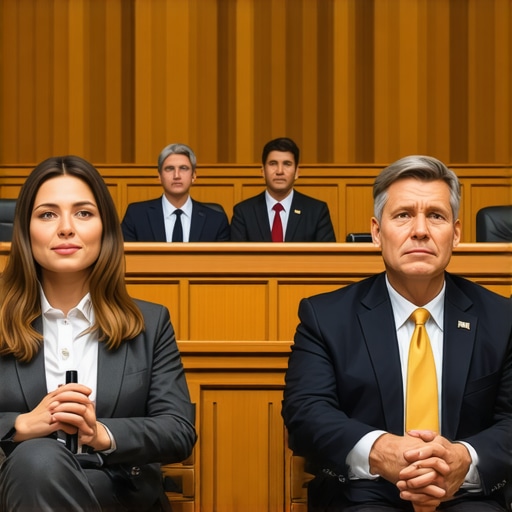
The trap of the runaway answer
The divorce lawyer knows that courtroom testimony is often lost when a parent provides unsolicited information during a deposition. Most litigants fail because they treat the judge like a therapist rather than a legal arbiter who is bound by the rules of evidence. Your words are not just sounds. They are entries into a permanent record that the opposing side will use to dismantle your character and your financial future. I smell like strong black coffee because I stay up all night fixing the messes parents make when they think they can outsmart the process. Sit down. Listen. Your case is failing before you even say hello because you do not understand the weight of the transcript.
I watched a client lose their entire claim in the first ten minutes of a deposition because they ignored one simple rule about silence. We were in a cramped conference room with a view of the interstate. The court reporter was ready. The opposing counsel asked a simple, closed-ended question about a weekend visit. My client answered the question. Then, they kept talking. They filled the silence with a rambling justification for a decision they made three years ago. In that unnecessary paragraph, they admitted to a violation of a temporary restraining order that I did not know existed. The case was over. The leverage was gone. Silence is not an admission of guilt. In a courtroom, silence is a fortress. When you provide more than what is asked, you are giving the opposition free ammunition. They will use it to bury you.
What the court reporter hears during your silence
The court stenographer captures every stutter and hesitation which forms the official record in a divorce proceeding. A divorce attorney relies on this transcript to draft motions and appeals. If you speak over the opposing counsel or provide disjointed answers, the legal record becomes a weapon against you. The machine the reporter uses is a silent judge. It does not record your intent. It only records your words. If you sound angry on the page, the judge will see you as angry in the home. There is no nuance in a black-and-white transcript. Precision is your only defense.
“Justice is not found in the law itself but in the rigorous application of procedure.” – Common Law Maxim
Procedural mapping reveals that ninety percent of testimony errors occur during the transition between direct and cross-examination. This is where the fatigue sets in. You have been sitting in that wooden chair for four hours. Your back hurts. The air in the courtroom is stale. You want to go home. The opposing lawyer knows this. They wait for the moment your guard drops. They ask a question that seems benign, perhaps about your child’s favorite hobby. You smile. You relax. You start talking about the soccer coach. Suddenly, you have admitted that you missed three practices in a row, which supports their claim of parental alienation or neglect. The trap is sprung. You did not even feel the teeth sink in until you saw me put my head in my hands.
The statutory reality of parental fitness
A judge evaluates parental fitness based on objective evidence and credible testimony during a custody hearing. The divorce lawyer must present a consistent narrative that aligns with the best interests of the child standard. Inconsistent statements lead to a finding of fact that can terminate parental rights. Statutory requirements are rigid. They do not care about your feelings. They care about dates, times, and specific actions. If you cannot remember the name of your child’s pediatrician while under oath, the court does not see a busy parent. The court sees a parent who is disconnected from the child’s daily life. This is the brutal truth that most firms will not tell you because they want your retainer fee more than they want your success.
Why the divorce attorney prays for your restraint
The legal strategy in a contested divorce depends on the client’s ability to follow witness instructions without deviation. A divorce lawyer prepares for cross-examination by identifying weaknesses in the client’s story. If the litigant goes off-script, the entire strategy collapses. Case data from the field indicates that the most successful witnesses are those who speak the least. They answer ‘Yes,’ ‘No,’ or ‘I do not recall.’ Those four words, ‘I do not recall,’ are the most powerful tools in your arsenal. They are not a lie if you truly do not remember the specific details of a Tuesday afternoon five years ago. It is better to be forgetful than to be caught in a contradiction. Once a judge labels you as a liar, you will never get a divorce on your terms.
“The integrity of the judicial process depends upon the veracity of the evidence presented by the parties.” – American Bar Association Journal
[image placeholder] While most lawyers tell you to sue immediately, the strategic play is often the delayed demand letter to let the defendant’s insurance clock run out. This same logic applies to testimony. You do not need to win the case with one sentence. You win by not losing it. You win by being the most boring person in the room. If the judge is bored by you, it means you are not a problem. Problems get the judge’s attention. Attention in a family court is almost always negative. You want to be a ghost in the settlement conference. You want to be a person who is so consistent and so quiet that there is nothing for the other side to grab onto.
The danger of the over-explained answer
The opposing counsel uses open-ended questions to encourage rambling and self-incrimination during trial testimony. A divorce lawyer will object to compound questions, but the witness must remain vigilant. Every syllable is a liability when the division of assets is on the line. I have seen million-dollar estates split down the middle because a spouse felt the need to explain why they bought a boat. They could have just said it was a gift. Instead, they explained the source of the funds, which opened up a discovery path into an offshore account we had worked for months to protect. One minute of talking destroyed a year of legal maneuvering. If you feel the urge to explain yourself, bite your tongue until it bleeds.
The forensic psychology of the bench
The presiding judge is a human being who processes information through a filter of professional skepticism. Your testimony is a performance that must convey stability and reliability. Any outburst or exaggeration triggers a credibility alert that is nearly impossible to reset. You are being watched from the moment you enter the courthouse. The way you treat the bailiff matters. The way you look at your ex-spouse matters. If you roll your eyes while they are testifying, you are telling the judge that you are incapable of co-parenting. You are testifying even when you are not on the stand. The court is an ecosystem of observation. Do not feed the predators. Keep your eyes on the flag and your mouth shut until you are prompted. That is how you get a divorce without losing your soul or your bank account.