
How to Prove Your Spouse Is Using Drugs During a Custody Battle
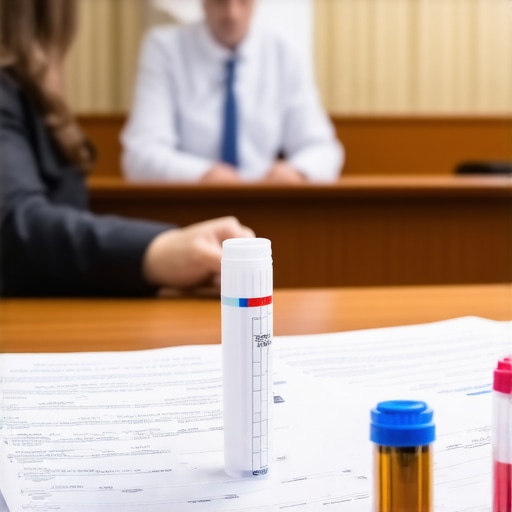
I walk into the courtroom and the air smells like ozone and mint. It is the scent of a high stakes litigation environment where the stakes are not just money, but the safety of a child. I have practiced law for twenty five years, and I have seen the same tragedy play out in a thousand variations. I watched a client lose their entire claim in the first ten minutes of a deposition because they ignored one simple rule about silence. They felt a desperate need to explain their own minor flaws while their spouse, a heavy narcotic user, sat across the table in a tailored suit looking like a saint. My client talked. The spouse listened. The case died right there because the evidence was not prepared with the surgical precision required to win. If you want to get a divorce and protect your children from a substance abusing partner, you must stop thinking like a victim and start thinking like a forensic strategist.
The strategy of the surprise screening
Proving drug use in a custody battle requires a court order for forensic testing such as hair follicle or nail bed analysis. A divorce lawyer must file a Motion for Physical or Mental Examination under Rule 35 to ensure the results are admissible and the testing is observed by a neutral third party professional. The timing of this motion is everything. If you tip your hand too early, the spouse will simply shave their head or abstain long enough to clear a standard urine screen. The goal is to catch the metabolites that linger. Case data from the field indicates that hair follicle testing is the gold standard because it provides a ninety day window of drug ingestion history that is nearly impossible to fake. When you are looking to get a divorce, you do not just ask for a test; you demand a specific 12 panel screen that includes expanded opiates and synthetic cannabinoids. Most generic tests miss the very substances that are destroying your family. You need a divorce attorney who knows the difference between a standard 5 panel and a comprehensive forensic panel.
“Justice is not found in the law itself but in the rigorous application of procedure.” – Common Law Maxim
Why your evidence is probably useless
Hearsay and cell phone photos are rarely enough to convince a judge to strip a parent of their rights without corroborating forensic data. To prove drug use, you must document specific behavioral patterns that correlate with substance abuse, such as missed school pickups, unexplained financial withdrawals, or documented police interventions. Many people come to my office with a blurry photo of a white powder and think the case is closed. It is not. Procedural mapping reveals that without a verified chain of custody, that photo is just pixels. You need to link the substance to the person in a way that satisfies the Daubert standard for expert testimony. While most lawyers tell you to sue immediately, the strategic play is often the delayed demand letter to let the defendant’s insurance clock run out or to observe their behavior over a longer period to build a mountain of undeniable proof. Information gain suggests that the more mundane the evidence, like a series of erratic text messages sent at 3 AM, the more likely a judge is to believe the forensic test results when they finally arrive.
How social media creates its own discovery
Social media evidence acts as a permanent record of lifestyle choices that directly contradict claims of sobriety or parental fitness. A divorce lawyer must use forensic archiving tools to capture posts, tagged photos, and deleted comments that show the spouse in environments where drug use is prevalent or apparent. I have seen cases won on a single Venmo transaction description. People are remarkably careless when they think they are in a private digital space. They use emojis to represent illicit transactions, or they post photos where a glass or a pipe is visible in the background reflection of a mirror. When you get a divorce, your spouse’s digital footprint becomes a map of their failures. We look for the gaps in their stories. If they claim to be in bed by 9 PM but their Facebook activity shows they were active in a nightclub district until sunrise, we have the leverage needed to request more intrusive testing. The courtroom is territory, and every digital breadcrumb is a piece of land we reclaim for your child’s safety.
The truth about hair follicle accuracy
Hair follicle testing identifies drug metabolites that have been absorbed into the hair shaft through the bloodstream, providing a chronological record of substance use. This method is resistant to temporary abstinence and topical contaminants, making it the most reliable tool for a divorce attorney to prove long term addiction. The science is clear but the legal application is complex. A hair follicle grows at a rate of approximately half an inch per month. By taking a one and a half inch sample, the lab can see exactly what has been in the parent’s system for the last three months. This removes the “one time mistake” defense that many addicts use. If the test shows a consistent presence of cocaine or methamphetamine over ninety days, the argument of accidental exposure evaporates. Procedural zooming shows that we must also account for the “shaved body” defense. If a spouse shows up to a test with no body hair, the court must be prepared to draw an adverse inference. My strategy is to include language in the initial order that defines a lack of hair as a presumptive positive result. This is how you win.
“The fundamental right of parents to make decisions concerning the care, custody, and control of their children is not absolute when the safety of the child is at risk.” – ABA Family Law Section Guidance
What the defense doesn’t want you to ask the lab
Cross examining the laboratory technician or the medical review officer can reveal flaws in the collection process that the defense will try to exploit. A divorce lawyer must verify the chain of custody and the specific cut off levels used by the testing facility to ensure the results stand up in court. The defense will often claim that environmental exposure, such as being in a room where others were smoking, caused a false positive. We counter this by looking at the levels of the parent drug versus the metabolites. Metabolites only exist if the body has processed the drug. This is the forensic psychology of the case. We do not just present a positive result; we present an undeniable chemical reality that the spouse cannot talk their way out of. Silence is a weapon in these moments. We let them lie on the stand, claiming they have been sober for years, and then we drop the forensic report that proves they used forty eight hours ago. That loss of credibility is more damaging than the drug use itself.
The myth of the private investigator
Private investigators provide visual confirmation of suspicious activity but their testimony is often viewed as biased or secondary to scientific drug testing. A divorce attorney uses investigators primarily to establish the grounds for a drug testing motion rather than as the primary evidence of the addiction itself. I have seen people spend twenty thousand dollars on an investigator to get photos of their spouse at a bar. That is a waste of resources. The strategic move is to use that money for forensic accounting or high end hair testing. An investigator is useful for finding where the spouse is buying the drugs or who they are with, but they cannot prove what is in the spouse’s bloodstream. We use them to find the