
How to Prove the ‘Best Interests of the Child’ in High-Conflict Cases
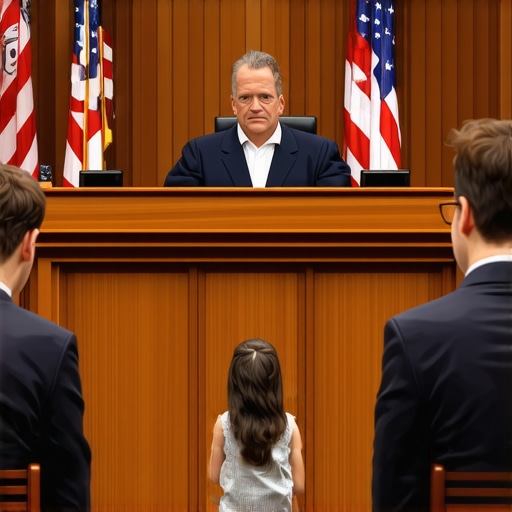
The anatomy of a high conflict custody disaster
A divorce lawyer must navigate the Best Interests of the Child doctrine which serves as the legal North Star in every divorce proceeding. This standard focuses on child safety, emotional stability, and parental fitness rather than the grievances or financial disputes of the adults involved in the litigation. I watched a client lose their entire claim in the first ten minutes of a deposition because they ignored one simple rule about silence. They felt the need to fill the void. They spoke until they contradicted their own sworn affidavit. In high conflict cases, your mouth is often the biggest threat to your custody goals. Your divorce attorney can only do so much if you provide the opposition with ammunition through lack of discipline. Success in the courtroom is not about who is the better parent in reality; it is about who can prove it through the cold, hard lens of admissible evidence. I smell the strong black coffee on my desk and look at the mountain of discovery. Most people think they can just tell their story. They are wrong. The court does not care about your story. It cares about the 12 factors of parental fitness defined by state law. If you cannot map your behavior to those factors, you have already lost. Each interaction, each text message, and each social media post is a brick in the wall of your reputation. High conflict cases are won in the preparation phase, months before a judge ever sees your face.
“Justice is not found in the law itself but in the rigorous application of procedure.” – Common Law Maxim
Evidence beyond the hearsay of a jilted spouse
A divorce attorney identifies that admissible evidence includes certified school records, medical logs, and third party witness testimony to establish a parent’s daily involvement. To get a divorce while seeking full custody, one must move beyond subjective claims of being the primary caregiver and provide an objective timeline of the child’s life. The court views your testimony as biased. It views your mother’s testimony as biased. It views your new partner’s testimony as suspicious. To win, you need the neutral parties. You need the dental records that show you were the one who took the child for their checkup. You need the teacher who can testify that you were the one at every parent teacher conference while the other spouse was nowhere to be found. This is the forensic reality of litigation. We look for the gaps. We look for the absences. When a parent claims they are deeply involved but cannot name the child’s pediatrician, the case begins to crumble. We utilize subpoenas to gather records from summer camps, extracurricular activities, and therapists. Every document is a data point. When these points are connected, they form a picture that is very difficult for a judge to ignore. This is not about being a good person. This is about being a documented parent.
The guardian ad litem as a double edged sword
A divorce lawyer understands that the Guardian Ad Litem or Attorney for the Child acts as an independent investigator for the court system. Their recommendations often carry more weight than the arguments of either party, making their investigative report the most significant document in a high conflict custody case. If you treat the Guardian Ad Litem (GAL) as your friend, you have made a fatal error. They are a fact finder. They are looking for inconsistencies. I have seen GALs flip a case because a parent made a disparaging remark about the other spouse during an informal home visit. You must be transparent but guarded. You must be cooperative but precise. The GAL will interview the child, and in high conflict cases, this is where the pressure is most intense. Children are intuitive. They feel the conflict. If a child sounds too rehearsed, the GAL will suspect parental alienation. If the child is too quiet, they may suspect fear. The logistics of these interviews are vital. The timing, the location, and the presence of any third parties can all be contested if the proper procedural steps are taken. You must understand that the GAL is looking for the path of least resistance for the child’s long term health. They are not looking for the fair result for you.
“The best interests of the child shall be the primary consideration in all actions concerning children.” – American Bar Association Policy
The specific mechanics of a custody evaluation
A divorce attorney prepares clients for a 730 evaluation or psychological custody assessment by reviewing standardized testing and clinical interview techniques. These evaluations provide the family court with a professional analysis of parental mental health, bonding, and potential risk factors within the home environment. While most lawyers tell you to sue immediately, the strategic play is often the delayed demand letter to let the defendant’s insurance clock run out or to allow more time for a favorable evaluation to conclude. The psychologist is looking for pathology. They use the MMPI-2 and other diagnostic tools to see if you are faking good or faking bad. If you try to manipulate the test, the validity scales will catch you. It is a clinical trap. I tell my clients that the psychologist is the most dangerous person in the room. One bad report can end your custody hopes for a decade. We analyze the evaluator’s CV. We look for bias in their previous reports. We look for whether they have a history of favoring one gender or one parenting style. The cost of these evaluations is high, often reaching five figures, but in a high conflict scenario, you cannot afford to skip this step. It provides the empirical data that judges crave to justify their decisions.
How digital evidence creates a permanent record
A divorce lawyer uses forensic digital discovery to extract text messages, emails, and GPS metadata that prove or disprove claims of parental neglect or harassment. In the modern era, to get a divorce without a deep dive into the digital footprint of both parties is professional negligence. Your phone is a witness. It tracks your location. It records your tone. It logs your response times. If you claim to be a peaceful co-parent but send fifty angry texts at 2 AM, the digital record will convict you. We use specialized software to organize these communications into searchable databases. We look for patterns of coercive control. We look for evidence of substance abuse hidden in private messages. The defense often tries to claim these messages are taken out of context. Our job is to build the context. We show the judge the escalation. We show the repeated violations of court orders regarding communication. In a high conflict case, the party that can remain silent and professional in the face of digital provocation is the party that wins. Silence is not just a right; it is a tactical advantage. Do not engage. Do not respond to the bait. Let the digital record reflect your restraint and their volatility.
Statutory frameworks for parental fitness
A divorce lawyer relies on state statutes that define parental fitness based on the ability to provide food, shelter, medical care, and emotional support. These legal standards vary by jurisdiction but generally prioritize the status quo of the child’s life to minimize emotional trauma during a divorce. Procedural mapping reveals that courts are hesitant to change a child’s primary residence unless a significant change in circumstances is proven. This is the high bar of litigation. You must prove that the current situation is harmful or that your proposed change is vastly superior. This is not about your desire to move or your new job. It is about the child’s stability. We look at the proximity to schools. We look at the continuity of care. We examine the specific wording of the local statutes regarding the moral fitness of the parents. While some argue that morality is subjective, in a courtroom, morality is defined by the impact of a parent’s lifestyle on the child’s development. If your lifestyle choices interfere with the child’s education or health, the court will intervene. Every motion filed must be grounded in these statutory realities. We do not file for the sake of filing. We file to establish a record of fitness that can withstand the scrutiny of an appellate court.