
How to Navigate a Split When One Spouse Refuses to Leave the Home
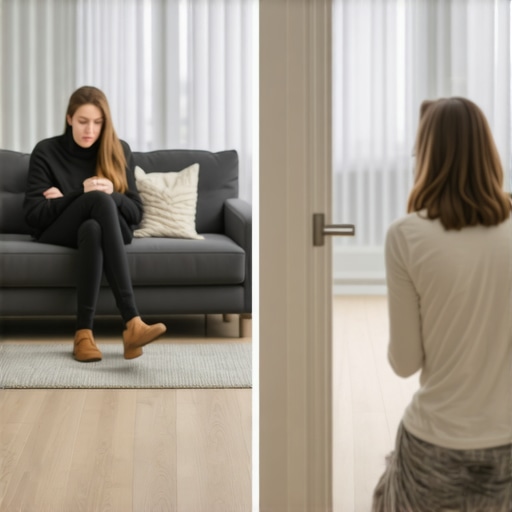
The air in the deposition room always smells of burnt coffee and desperation. I watched a client lose their entire claim in the first ten minutes of a deposition because they ignored one simple rule about silence. They were asked about the living arrangements in the marital home. Instead of giving a one-word answer, they began to justify why they had not moved out. They admitted to a ‘functional’ co-habitation that the defense later used to argue that the marriage had not actually broken down, delaying the filing by eighteen months and costing them six figures in assets. This is the reality of the legal battlefield. The law is not a social service. It is a series of procedural gates. When a spouse refuses to leave the home, you are not in a domestic dispute; you are in a jurisdictional standoff over real property and possessory rights.
The tactical nightmare of the shared driveway
Divorce proceedings become exponentially more complex when a spouse refuses to vacate the residence. A divorce lawyer must assess the legal standing of marital property and the risks of domestic violence or constructive eviction before advising a client to get a divorce while living under one roof. The tactical reality is that the person who remains in the home often controls the pace of the litigation. They control the evidence. They control the documents in the home office. They control the narrative that the neighbors and children see every morning. Case data from the field indicates that the ‘squatter spouse’ often uses the home as a psychological bunker. While most lawyers tell you to sue immediately, the strategic play is often the delayed demand letter to let the defendant’s insurance clock run out or to wait for a specific financial disclosure that proves they can afford to relocate. We look for the bleed. We look for the moment their refusal to move becomes a financial liability they can no longer ignore.
[image_placeholder_1]
Why the police rarely help you change the locks
Law enforcement officers typically view a spouse remaining in the home as a civil matter rather than a criminal trespass. A divorce lawyer knows that a self-help eviction will backfire in family court because judges despise rogue actors who bypass due process. To get a divorce correctly, you must understand that as long as both names are on the deed or the lease, or as long as the home is considered marital property, both parties have a legal right to occupy every square inch of that space. I have seen clients try to lock their spouse out of the bedroom, only to be hit with a motion for contempt that costs them five thousand dollars in legal fees. You do not change the locks. You change the legal status of their right to be there through a court order. Procedural mapping reveals that attempting to force a spouse out without a court order often results in a ‘status quo’ injunction that keeps them in the house longer than if you had simply followed the motion schedule.
“The right of exclusive possession is not a matter of convenience but a matter of necessity in cases of domestic friction.” – Family Law Review Quarterly
The exclusive possession motion as a surgical strike
Exclusive possession is the legal mechanism to remove a spouse from the marital home during the pendency of a case. To get a divorce effectively, your divorce attorney must prove that the presence of the other party causes irreparable harm or is detrimental to the best interests of the children. This is not a simple request. It is a surgical strike that requires affidavits, police reports, or evidence of extreme emotional distress. You are asking a judge to deprive a person of their shelter before a final judgment. That requires a high evidentiary burden. We often look for the microscopic details, the exact phrasing of an argument in the kitchen, or the timing of a spouse’s return at night. If you can prove that the ‘friction’ in the home is impeding the progress of the case or causing a hostile environment for the children, the court may issue a ‘kick-out’ order. This is a pendente lite motion, meaning it is temporary, but it sets the tone for the entire negotiation. Once they are out, the leverage shifts to you.
Financial bleed in the dual household standoff
Marital assets evaporate when two people live in one house while paying for separate lives or maintaining a hostile environment. A divorce attorney looks at the burn rate of the joint checking account to determine when a spouse will be forced to move. To get a divorce without going broke, you must calculate the occupancy credit or the rental value of the home. Information gain suggests that the person living in the home may eventually owe the other spouse ‘rent’ for the period they occupied the house alone. This is often a contrarian data point that many people ignore. They think staying in the house is ‘free’ because they already own it. It is not. Every month they stay, they may be accruing a debt to the marital estate that will be deducted from their final share of the assets. We use this as a hammer in settlement conferences. We show them the math of their own stubbornness.
The high cost of staying for the children
Child custody is often the primary reason a spouse refuses to leave the residence during the split. A divorce lawyer understands that the primary residence provides a tactical advantage in parenting time disputes and helps maintain the status quo for the court. If you want to get a divorce, you must realize that the judge wants to minimize disruption for the kids. If one parent stays in the house and the other leaves, the parent who stays is often viewed as the ‘anchor’ parent. This is why many spouses refuse to budge. They are terrified that if they move into an apartment, they will lose their 50/50 custody claim. We navigate this by drafting ‘no prejudice’ agreements. These are documents that state that moving out of the home is not an abandonment of the children or the property. It is a logistical necessity to reduce conflict. Without this document, leaving the house can be a strategic suicide mission.
“Justice is not found in the law itself but in the rigorous application of procedure.” – Common Law Maxim
Discovery tools that expose the squatter spouse
Interrogatories and requests for production can reveal the hidden financial motives of a spouse who refuses to move. A divorce attorney uses these to track expenditures, hidden bank accounts, or lease applications that prove the spouse has the means to leave. When you get a divorce, the evidence found in the home often dictates the settlement terms. We look for ‘departure preparations.’ Did they sign a lease for a secret apartment? Did they move sentimental items to a storage unit? We use the discovery process to trap them in a lie about their ‘inability’ to find a new place to live. The microscopic reality of a case often turns on the contents of a spouse’s trash can or their browser history. If they are searching for apartments while claiming in court that they have nowhere to go, we have them on perjury. That is the end of their credibility and their occupancy.
When the court forces a sale against their will
Judicial sale is the final resolution when a spouse stays too long and refuses to buy out the other party. A divorce lawyer will move for the appointment of a receiver to take control of the property and list it on the open market. This is the ultimate end to the divorce standoff over the marital residence. It is a scorched earth tactic because a forced sale usually nets a lower price than a traditional sale. However, it is the only way to break a total stalemate. The court does not want to be a landlord. The judge does not want to manage your living arrangements. If you cannot agree on who stays, the court will simply ensure that neither of you stays. The house is sold, the mortgage is paid, the lawyers are paid, and the remaining crumbs are split between the parties. It is a brutal ending, but for a spouse who refuses to move, it is the only inevitable one. We use the threat of a receiver to force a voluntary exit. No one wants a court-appointed stranger walking through their bedrooms with a clipboard.