
Why You Should Never Use Your Work Phone for Legal Calls
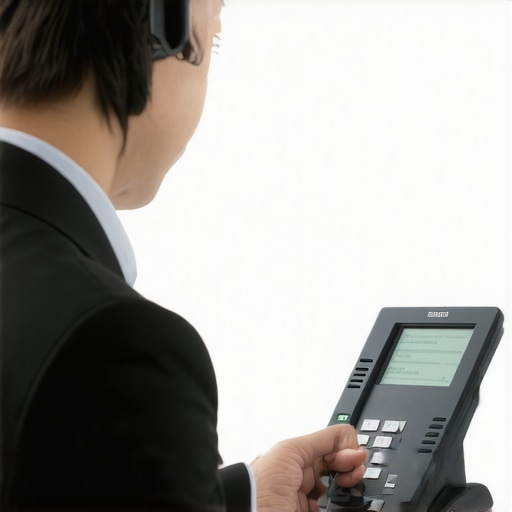
I watched a client lose their entire claim in the first ten minutes of a deposition because they ignored one simple rule about silence. We were sitting in a sterile conference room that smelled of burnt coffee and floor wax. The opposing counsel asked one question about a text message sent at 2:14 PM on a Tuesday. My client turned gray. They had used their company-issued iPhone to discuss our litigation strategy. In that moment, the privilege evaporated. The case was over before the court reporter could change her paper roll. You think your work phone is your private property. You are wrong. It is a surveillance bug owned by your employer and accessible by any aggressive divorce attorney. If you are preparing to get a divorce, your first move is not hiring me. Your first move is putting that work phone in a drawer and never touching it again for personal business.
The ghost in the discovery process
Using a company device to communicate with a divorce lawyer creates a categorical waiver of the attorney client privilege because you have no reasonable expectation of privacy. When you sign an employee handbook, you consent to the monitoring of all data on corporate hardware. An expert divorce attorney will exploit this lack of privacy to subpoena your employer for every byte of data. This includes deleted messages, GPS logs, and even drafts of emails you never sent. Discovery is not a polite exchange of documents. It is a forensic autopsy of your digital life. If the data sits on a server owned by a third party, the protective shield of legal counsel is shredded. You are effectively inviting your boss and your spouse’s legal team into our private strategy sessions. The humid heat of the subway grate outside my office is more predictable than a judge’s ruling on a waived privilege motion.
“Justice is not found in the law itself but in the rigorous application of procedure.” – Common Law Maxim
Your employer as an involuntary witness
Corporate IT departments keep logs that you cannot imagine. When you use the office Wi-Fi to search for a divorce lawyer, you create a timestamped entry in a SQL database. This data is searchable and discoverable. Your employer does not want to be involved in your litigation, but a subpoena for records is a mandate they will not ignore. They will hand over your device for forensic imaging. A forensic image is a bit-by-bit copy of the storage media. It captures unallocated space where deleted files live. Your divorce attorney cannot protect you from a mirror image of a hard drive that you do not own. The tactical timing of a motion to quash such a subpoena is often a losing battle. The court sees a company phone as a company tool. Period. The logistics of your defense fall apart when your own hardware becomes a witness for the opposition.
The forensic trail you cannot erase
Modern smartphones are not just communication tools; they are sophisticated data loggers. Every time you connect to a cell tower or a Bluetooth beacon, the device records the event. If you are involved in a high-stakes divorce, your location history can be used to contradict your testimony. I have seen cases where a client claimed to be at a business meeting while their work phone’s metadata placed them at a bar. The divorce attorney on the other side will use this to destroy your credibility. Credibility is the only currency you have in a courtroom. Once the judge catches you in a digital lie, every other piece of evidence you present is viewed with suspicion. This is the brutal truth of modern litigation. Your metadata speaks louder than your testimony. You must treat your work phone as a hostile agent.
“Privacy is not a self-executing right; it requires the affirmative protection of the holder.” – ABA Model Rules of Professional Conduct
The myth of the private folder
Many employees believe that using a personal Gmail account on a work laptop or phone keeps their messages safe. This is a dangerous fallacy. If the password was ever saved in the browser’s keychain or if the data passed through the corporate firewall, it may be subject to recovery. The software used by forensic specialists can extract tokens that allow them to bypass two-factor authentication in some environments. When you prepare to get a divorce, you are entering a period of extreme scrutiny. The opposing divorce lawyer will look for any crack in your armor. They will look for the delayed demand letter or the inconsistent statement in a text to a coworker. Do not give them the ammunition. The strategic play is total digital separation. Buy a burner phone with cash. Use a private network. Keep your legal life entirely offline from your professional hardware.
[image placeholder]
Defensive measures for the strategic spouse
If you have already made the mistake of using a work device, do not delete anything. Deletion can be interpreted as spoliation of evidence, which carries heavy sanctions. Instead, stop using the device for legal matters immediately. Inform your divorce lawyer so they can prepare for a potential waiver argument. We need to map the procedural reality of your data footprint. Case data from the field indicates that transparency with your own counsel is the only way to mitigate a discovery disaster. We must analyze the specific wording of your employment contract to see if there are any remaining arguments for privacy. However, the odds are not in your favor. Litigation is a game of leverage. By using a work phone, you have given the other side a lever long enough to move your entire world. Stop the bleed now. Your future depends on the silence of your devices.