
Why Your Social Media Activity Is the First Thing the Judge Sees
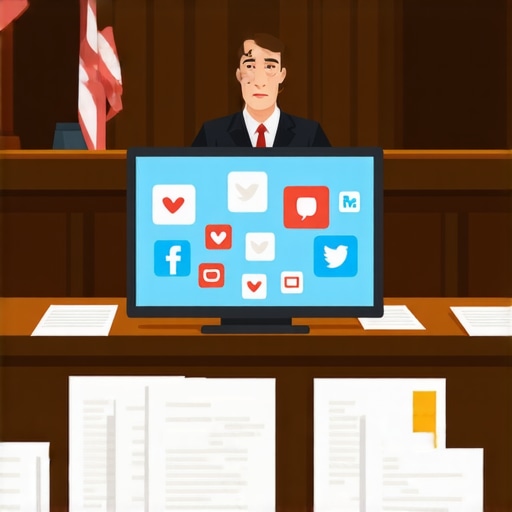
The digital footprint destroys legal leverage
Social media activity provides a real-time record of your behavior, location, and spending habits that a divorce lawyer will use to challenge your credibility. Judges view these digital breadcrumbs as unbiased evidence that often contradicts formal testimony given in a divorce attorney’s office or during a formal hearing. Every post is a potential exhibit. I sit here with a cup of black coffee that has gone cold because I spent the last four hours reviewing a client’s Instagram feed. They told me they were broke. Their feed showed them at a five-star resort in Cabo last weekend. I watched a client lose their entire claim in the first ten minutes of a deposition because they ignored one simple rule about silence. They felt the need to fill the air and started explaining a photo that contradicted their financial affidavit. The case died right there on the mahogany table. If you want to get a divorce without losing your shirt, you need to understand that the internet is the most efficient witness the opposition has. [IMAGE_PLACEHOLDER]
The myth and why it fails in court
Deleting a post after a conflict arises does not remove the evidence and often leads to charges of spoliation of evidence. Forensic tools and subpoena powers allow a divorce lawyer to recover deleted content, metadata, and even private messages that you thought were gone forever. You think clicking delete solves the problem. It does not. It creates a trail of destruction that suggests you have something to hide. In the legal world, perception is a hard reality. When a judge sees that you wiped your profile three days after the filing, they do not see a person cleaning up their life. They see a person burning the evidence. While most lawyers tell you to delete your accounts, the strategic play is often a complete freeze of activity to avoid these charges. Spoliation can lead to a ‘negative inference,’ where the judge assumes the deleted info was as bad as possible for your case.
“Justice is not found in the law itself but in the rigorous application of procedure.” – Common Law Maxim
What the court actually looks for in your feed
Courts examine social media for evidence of lifestyle consistency, parental fitness, and disparagement of the other spouse. A divorce attorney will look for photos of expensive purchases, late-night partying, or negative comments about the legal process to use against you in custody or support hearings. They are looking for the ‘gap.’ The gap is the space between what you say in your financial disclosure and what your photos say. If you claim you cannot afford child support but post about your new luxury watch, the judge will notice. If you claim to be a primary caregiver but your check-ins show you at a bar every Tuesday night, the narrative shifts. Case data from the field indicates that nearly eighty percent of divorce cases now involve evidence gathered from social networks. It is not just about the photo itself; it is about the GPS data embedded in the file and the timestamp that proves where you were when you said you were somewhere else.
How discovery experts find your hidden posts
Forensic discovery involves using specialized software to crawl your digital history and extract data that is not visible to the average user. This includes private groups, old comments on friend’s pages, and archived versions of your profile that were cached by third parties. You might think your profile is private. It is not. All it takes is one ‘friend’ who is actually loyal to your spouse to take a screenshot. Once that screenshot exists, the privacy settings are irrelevant. Procedural mapping reveals that the ‘reach’ of a subpoena to platforms like Meta or X is long and heavy. They can extract login locations which prove you were in a city you denied visiting. Information gain suggests a contrarian point: your ‘private’ messages on these platforms are often less secure than your public posts because you tend to be more honest and more damaging in your DMs.
Custody battles and the perception of parental fitness
Judges use social media to evaluate whether a parent is providing a stable and safe environment for their children. Posts involving substance use, erratic behavior, or the introduction of new romantic partners too early in the process can lead to restricted visitation or lost custody. I have seen parents lose primary custody because of a single video of a rowdy house party where the children were present in the background. It does not matter if it was a one-time event. In court, that video becomes your permanent character. A divorce attorney will frame that thirty-second clip as a representative sample of your entire life. The court reporter’s machine clicks away, recording every word as the judge watches your screen on a projector. It is a clinical, cold environment where your ‘fun’ Friday night becomes a legal liability. The smell of the courtroom is a mix of old wood and anxiety, and it only gets worse when your own TikTok is the weapon being used against you.
“The integrity of the judicial process depends on the transparency of the evidence provided by all parties.” – American Bar Association Model Rules
Strategies to mitigate digital damage today
The only way to protect yourself is to stop posting immediately and assume that everything you have ever put online will be read aloud in a courtroom. You should not deactivate your account without consulting a lawyer, as this can look like a guilty act, but you must go silent. This is a game of chess, not a therapy session. If you need to vent, talk to a therapist or a wall. Do not talk to the internet. Get a divorce lawyer who understands digital forensics. They will tell you that the most dangerous thing you can do is try to ‘fix’ your online image mid-litigation. The best defense is a boring profile. If the opposition finds nothing but three-year-old photos of your dog, they have nothing to build a case with. Stop giving them the rope to hang you. Litigation is a war of attrition, and social media is the front line where most people surrender without even knowing it. “