
Why Mediation is Often Better for Privacy Than a Public Trial
The Brutal Reality of Public Litigation
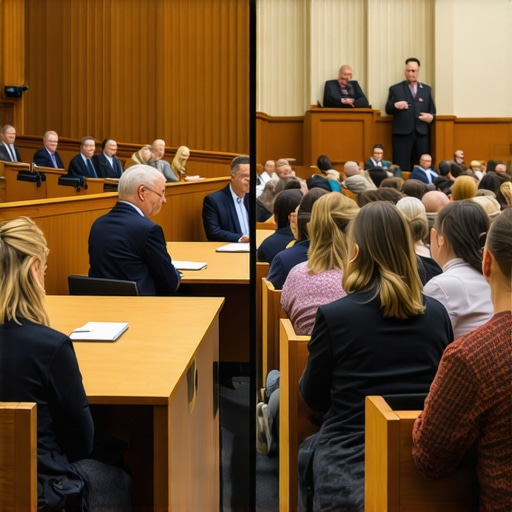
The room smelled of stale coffee and the acidic scent of burnt toner. I watched a client lose their entire claim in the first ten minutes of a deposition because they ignored one simple rule about silence. They thought they could explain their way out of a contradiction. Instead, they handed the opposing counsel a weapon that would be filed in the public record for eternity. This is the fundamental flaw of the courtroom. When you get a divorce in a public forum, you are not just fighting a spouse; you are performing for a gallery that never leaves. Every financial failure, every parenting lapse, and every heated text message becomes a permanent asset of the state’s digital archives. If you value your reputation or your future business prospects, the courtroom is a trap. You think you are seeking justice, but you are actually participating in a slow-motion car crash that anyone with an internet connection can watch. The deposition is the first point of failure. It is a sterile environment where your words are transcribed by a machine that has no empathy. Those transcripts eventually find their way into motions, and those motions are uploaded to the clerk’s portal. This is why the strategic play is to avoid the building entirely. Mediation is not about being nice. It is about closing the door before the neighbors start recording. [IMAGE_PLACEHOLDER]
The public record is a permanent digital footprint
Mediation ensures that personal data, corporate secrets, and family conflicts remain confidential rather than becoming public records. When you get a divorce through a trial, the divorce attorney must file evidence that the clerk of court makes accessible to anyone, whereas mediation occurs in private offices under legal privilege. Case data from the field indicates that ninety percent of high-net-worth individuals prioritize these private settlements to avoid the reputational damage inherent in public testimony. The court system is built on the principle of transparency, which is a disaster for a private citizen. Every affidavit you sign is a public confession. Every bank statement you produce becomes a document that can be subpoenaed by future creditors or business rivals. The shadow of the litigation process is long. Once a document is filed, it is nearly impossible to scrub from the third-party aggregators that scrape court data. While most lawyers tell you to sue immediately, the strategic play is often the delayed demand letter to let the defendant’s insurance clock run out while keeping the details off the docket.
“Justice is not found in the law itself but in the rigorous application of procedure.” – Common Law Maxim
Financial exposure in the open courtroom
Financial affidavits, tax returns, and business valuations filed during a divorce are public documents unless a judge grants a rare protective order. In mediation, your divorce lawyer can exchange these financial disclosures privately, ensuring that competitors or creditors cannot access your net worth or revenue streams through public portals. The modern litigation environment is a goldmine for data brokers. They use bots to monitor new filings for keywords related to wealth. If you are a business owner, your profit margins and client lists could be attached to a motion for alimony. In a public trial, the judge requires transparency. In mediation, the requirement is only for the parties to reach an agreement. You can use a memorandum of understanding that references a private settlement agreement. This keeps the specific numbers out of the final judgment. It is a surgical approach to asset protection. Procedural mapping reveals that the more you file, the more you bleed. Every line item in your budget is a potential headline for someone looking to do you harm.
Testimony under oath creates an immutable history
Direct examination and cross-examination in a public trial create a transcribed record of your personal life that cannot be erased. A divorce attorney uses this testimony to build a narrative, but mediation allows for informal discussions that are inadmissible in future court proceedings under statutory confidentiality rules. I tell my clients that the witness stand is the most dangerous place on earth. You are under pressure. You are being baited. You are tired. One wrong answer about a past indiscretion becomes a permanent part of the record. In mediation, we can have those difficult conversations in a caucus room. If you say something stupid in a mediation room, it stays in the mediation room. The mediator is legally bound to keep your secrets. The court reporter is legally bound to type them out and sell them to whoever pays the fee. The difference is binary. One is a vault; the other is a megaphone. The tactical timing of a motion to dismiss can often be used to force mediation before the first round of public discovery begins. This is the defensive architecture of a veteran trial lawyer.
“The core of the legal profession is the preservation of client confidence, a task made nearly impossible by the transparency of modern dockets.” – American Bar Association Model Rules Commentary
Protective orders are not a guaranteed shield
Motions to seal a court file are rarely granted because of the constitutional right to public access to judicial proceedings. Relying on a divorce lawyer to seal the record is a high-risk strategy, whereas mediation provides automatic privacy through settlement privilege and confidentiality agreements signed by all participating parties. Judges hate sealing files. They see it as an affront to the open-court doctrine. Even if you get a temporary order, a local journalist or a curious relative can file a motion to intervene and unseal the records. You are fighting an uphill battle against a system that wants everything to be seen. Mediation bypasses this entire constitutional conflict. It is a contract-based solution. The rules of the contract dictate the privacy of the session. There is no judge to overrule the agreement to keep things quiet. This is the definition of control. In a courtroom, the judge is the master of your narrative. In a conference room, you and your attorney hold the pen.
The confidentiality of the mediator note taking process
Mediators operate under state statutes that specifically exempt their notes and work product from discovery or public disclosure. This statutory protection allows a divorce attorney to explore settlement options without the risk of those negotiations being used as evidence of liability or fault in a future trial. The mediator’s yellow pad is the safest place for your secrets. Those notes are often shredded or locked away after the session. They are not part of the court file. They are not subject to a public records request. This allows for a level of honesty that is impossible in a courtroom. You can admit fault. You can offer a compromise. You can express fear. None of these things can be used to bury you later. This is the strategic silence that wins wars. The discovery process is a fishing expedition designed to find dirt. Mediation is a controlled environment where the dirt is contained and disposed of properly. The logistics of the conference room are designed for resolution, not for the spectacle of the verdict. The final strategy is to settle in the dark so you can live in the light.