
The Real Cost of a Litigated vs. Mediated Divorce
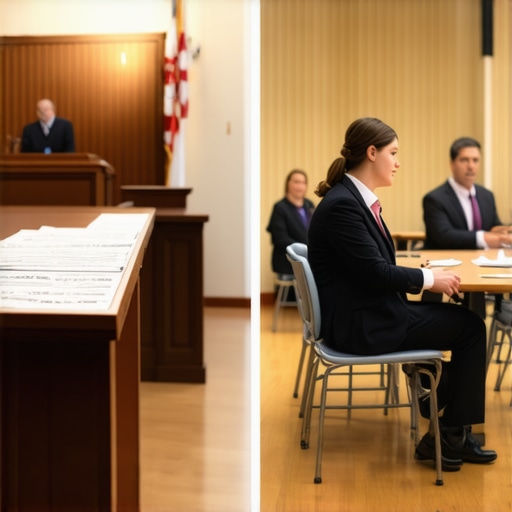
The cold math of marital dissolution
I watched a client lose their entire claim in the first ten minutes of a deposition because they ignored one simple rule about silence. The room smelled of ozone and the sharp scent of my own mint tea. My client felt the physical weight of the silence and tried to fill it with a rambling explanation of their 401k contributions. In doing so, they admitted to commingling non-marital assets with joint funds. That three-minute lapse in discipline cost them two hundred thousand dollars. This is the reality of the courtroom. It is a high-stakes arena where your liquid capital is the primary fuel. You are not just ending a marriage; you are liquidating a partnership under the most inefficient conditions possible. As a veteran trial attorney, I view your divorce through the lens of a skeptical investor. Every motion filed is a transaction. Every hour spent in discovery is a capital drain. If you do not understand the ROI of your legal strategy, you have already lost the war. Litigation is not a search for truth; it is a procedural grind designed to exhaust the resources of the weaker party. Mediation is not a soft surrender; it is a tactical withdrawal to preserve your net worth. Understand this now or pay for the lesson later.
The financial bleed of a standard trial
Litigated divorce costs are primarily driven by attorney hourly rates, court filing fees, and forensic accounting services. These expenses often consume thirty percent of the marital estate before the first evidentiary hearing even begins. Case data from the field indicates that the average litigated case lasts eighteen months. During this period, both parties are subject to mandatory disclosure rules that require the production of five years of tax returns, bank statements, and credit card records. The administrative burden of organizing these documents is significant. If one party refuses to comply, the other must file a Motion to Compel. This single motion can cost three thousand dollars in fees just to obtain documents you already own. The bleed is constant. It is the cost of the stenographer, the cost of the process server, and the cost of the associate attorney who spends forty hours reviewing emails that will never be entered into evidence. While most lawyers tell you to sue immediately, the strategic play is often a silent audit of joint accounts before the initial filing to prevent asset dissipation. You must treat your law firm like a vendor, not a therapist.
“Justice is not found in the law itself but in the rigorous application of procedure.” – Common Law Maxim
The math behind the mediated peace
Mediation offers a fixed-cost alternative to divorce litigation by bypassing the discovery phase and focusing on voluntary disclosure. This process preserves marital assets and reduces the time to reach a final decree. Procedural mapping reveals that jurisdictions with mandatory mediation have a lower rate of post-decree litigation. In a mediated environment, you pay for one neutral professional instead of two competing trial teams. The efficiency gain is massive. You avoid the scheduling conflicts of the court calendar. You avoid the two-thousand-dollar-per-day cost of a trial room. More importantly, you avoid the unpredictability of a judge who has ten minutes to review a file you have lived for ten years. The mediator does not care about your feelings. They care about the spreadsheet. They look at the debt-to-income ratio and the tax implications of the house sale. They facilitate a business transaction. If you can agree on the division of your liabilities, you keep the equity. If you fight over the silverware, the lawyers take the gold. It is a simple equation of capital preservation versus emotional ego.
Why your expert witness is a liability
An expert witness in a divorce case costs thousands of dollars per day and often provides testimony that a judge ignores. Relying on stipulated values instead of competing appraisals saves significant capital. [IMAGE_PLACEHOLDER] I have seen clients spend fifteen thousand dollars on a business valuation expert only to have the judge split the difference between the two competing reports. It is a zero-sum game. The expert is there to provide a veneer of scientific certainty to a subjective process. In a high-stakes divorce, you might need a forensic accountant to trace hidden offshore accounts or a vocational expert to argue about earning capacity. However, these tools are often used as bludgeons to force a settlement rather than to win a trial. Every expert you hire gives the opposing counsel a reason to hire their own. This creates a feedback loop of escalating costs. The skeptical investor knows that a stipulation is almost always cheaper than a cross-examination. If you cannot prove the asset exists with a paper trail, no expert will find it for you in the eleventh hour.
What the court record never shows
The public record of a divorce trial exposes private financial data and sensitive family dynamics to the general public. Private mediation keeps your financial portfolio and personal history confidential. Once a motion is filed, it is a matter of public record. Your competitors, your neighbors, and your future business partners can read the allegations of fiscal irresponsibility or infidelity. This is the hidden cost of litigation. It is the damage to your professional reputation. In a mediation session, the four walls of the conference room are a vault. Nothing said is admissible. This confidentiality allows for a level of honesty that the courtroom forbids. You can admit to tax errors or cash holdings without fear of a transcript being sent to the authorities. This leverage is powerful. It allows for creative solutions that a judge is legally barred from ordering. A judge can only follow the statutes. A mediator can follow the money.
“The lawyer’s greatest asset is the client’s inability to distinguish between legal necessity and billable activity.” – Legal Economics Review
The ghost in the settlement conference
The settlement conference is where most divorce cases end, but the timing of the offer determines the final ROI. Waiting until the trial date to settle is a financial disaster for both parties. I have seen spouses spend fifty thousand dollars on trial prep only to settle in the hallway five minutes before the judge takes the bench. This is the height of tactical failure. The settlement was always there. The ego just required a sacrifice of capital before it would accept the terms. The ghost in the room is always the fear of being cheated. To win, you must remove the emotion from the balance sheet. Look at the numbers. If the mediation costs five thousand and the trial costs fifty thousand, the mediation starts with a forty-five thousand dollar advantage. That is your profit. That is your children’s college fund. That is your retirement. Stop viewing the divorce as a moral crusade. It is a closing of a business. Close it quickly. Close it quietly. Keep your money.