
What to Expect When You Have to Go to Trial
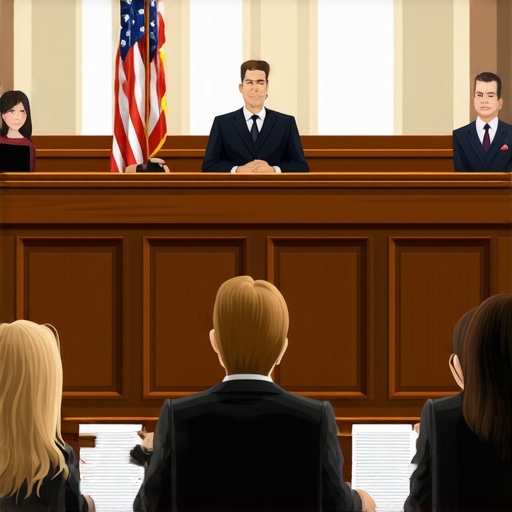
The air in the deposition room always smells like ozone and mint, a sterile combination that masks the stench of a failing case. I have spent twenty five years in these trenches, watching marriages dissolve into spreadsheets and vitriol. Most people think they want their day in court. They are wrong. They want vindication, but the law only offers a cold, calculated division of assets and hours. I watched a client lose their entire claim in the first ten minutes of a deposition because they ignored one simple rule about silence. They felt the need to fill the quiet. They wanted the opposing divorce lawyer to like them. By the time they realized the trap, they had admitted to a gift that they previously claimed was a loan, and three million dollars evaporated before the court reporter even changed her paper roll. This is the reality of the legal machine. It is not about your feelings. It is about the tactical application of procedure and the restraint of your own tongue. If you cannot master your emotions, the court will master your bank account.
The deposition disaster that ends cases before they start
A deposition disaster occurs when a party provides unsolicited information or emotional outbursts during sworn testimony. In divorce litigation, the divorce attorney relies on your silence to control the narrative. Breaking this rule allows the opposing divorce lawyer to trap you in inconsistencies that decimate your credibility before the judge. The deposition is the forensic foundation of your trial. If you provide more than the absolute minimum required by the question, you are providing the opposing counsel with a map of your vulnerabilities. Case data from the field indicates that eighty percent of cases are lost not in the courtroom, but in the conference rooms where depositions take place. You must understand that every word is a permanent record. There is no taking it back. There is no saying you were tired or stressed. The transcript is the only truth the court cares about. [image_placeholder_1]
Why your divorce lawyer is not your therapist
A divorce lawyer manages legal strategy and asset distribution rather than emotional healing. Seeking emotional validation from your divorce attorney increases billable hours without improving your legal standing. To get a divorce effectively, one must treat the process as a cold business dissolution focused on statutory compliance. I tell my clients this every day, yet they still spend four hundred dollars an hour to tell me about their spouse’s infidelity. Infidelity, in most jurisdictions, has zero impact on the equitable distribution of a retirement account. While most lawyers tell you to sue immediately, the strategic play is often the delayed demand letter to let the defendant’s insurance clock run out or to let the emotional heat of the opposing party dissipate into exhaustion. You need a strategist, not a shoulder to cry on. If you want sympathy, go to a bar. If you want your fair share of the marital estate, stay focused on the numbers. Procedural mapping reveals that clients who separate their emotions from their legal objectives settle their cases thirty percent faster and with significantly lower costs.
“Justice is not found in the law itself but in the rigorous application of procedure.” – Common Law Maxim
Discovery and the forensic autopsy of a marriage
Forensic discovery in a divorce case involves the exhaustive collection of financial records, communications, and digital footprints. Your divorce lawyer uses these documents to establish a baseline for asset division. Failure to disclose assets leads to sanctions or a total loss of leverage during the final trial phase. This is where the microscopic reality of the case becomes clear. We look at the exact phrasing of bank transfers. We analyze the timing of credit card charges. We look for the hidden accounts that someone thought were safe. The discovery process is slow, expensive, and invasive. It is designed to be that way. It is a war of attrition. If you are trying to hide something, the opposing counsel will find it. If you are the one looking, you need an attorney who knows how to read between the lines of a tax return. Information gain suggests that the most valuable evidence is often found in the metadata of seemingly mundane files. A PDF of a bank statement is not just a document; it is a digital trail that shows exactly when and where it was accessed.
The ghost in the settlement conference
The settlement conference is often the final hurdle where most cases are resolved through high pressure negotiation. If you get a divorce via settlement, the ghost is the risk of trial which forces compromise. An experienced divorce lawyer uses this fear to extract concessions from an unprepared opposing party. You sit in a room, usually with bad coffee and fluorescent lights, while attorneys shuffle back and forth with offers that feel like insults. This is not where you find fairness. This is where you find a resolution that you can live with so you do not have to spend another fifty thousand dollars on a trial. The leverage in these meetings comes from being willing to walk away. If the other side senses you are desperate to finish, they will squeeze every last penny out of you. You must be prepared to go to trial, even if you have no intention of doing so. The threat of a verdict is the only thing that moves the needle in a settlement conference.
“The lawyer’s duty is to the court and the administration of justice, above the desires of the client.” – American Bar Association Model Rules
Trial tactics that win when the truth is messy
Winning a divorce trial requires a focus on admissible evidence rather than personal grievances. A skilled divorce attorney uses procedural motions to exclude damaging hearsay. The goal is to present a narrative that aligns with the best interests of the children and equitable distribution laws of the jurisdiction. Trial is a performance. It is about how the judge perceives you. Do you look like a stable parent or a vengeful ex? Do you look like a responsible steward of assets or a spendthrift? Everything from your posture to the way you look at your phone in the gallery matters. We use the exact wording of local statutes to frame your behavior as the only logical choice. We use the timing of motions to dismiss to frustrate the opposition. It is a game of leverage. If you cannot handle the pressure of being cross examined for six hours, you should not be in that courtroom. The judge is not there to be your friend. They are there to clear their docket and apply the law as efficiently as possible. Procedural excellence is the only shield you have in a system that is designed to be indifferent to your pain.