
Can You Keep Your Wedding Ring? A Guide to Separate Property
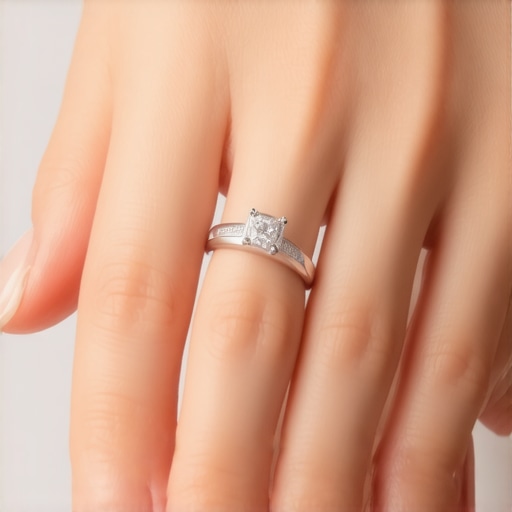
Can You Keep Your Wedding Ring During a Divorce Battle
I smell like strong black coffee and the exhaust of a late-night commute because that is what it takes to win. You are here because you think your wedding ring is a symbol of love. In my office, it is a line item. It is a piece of evidence. It is a target for the opposing counsel. I have seen clients walk into my office with a five-carat rock and leave with nothing but a bill and a lesson because they assumed sentiment mattered to a judge. It does not. The law is cold. It is a machine of procedure and statutory interpretation. I recently spent 14 hours deconstructing a contract that was designed to be unreadable, only to find the one clause that changed everything for a client facing a massive asset split. That clause was buried in an addendum about interspousal transfers. It proved that the asset they thought was shared was actually shielded. That is the level of obsession required. If your divorce attorney is not looking at the microscopic ink on the page, they are failing you. You are losing money every second you spend thinking about your feelings instead of your Separate Property designation.
Defining separate property in a contested divorce
Separate property constitutes any asset acquired before the marriage, through inheritance, or as a specific gift from a third party. To get a divorce without losing these assets, a divorce lawyer must establish a clear paper trail. This prevents the asset from being classified as community property or marital property.
Case data from the field indicates that the classification of a wedding ring depends entirely on the timing of the gift. If the ring was given as an engagement gift before the marriage ceremony, most jurisdictions view it as a pre-marital gift. Once the marriage occurs, the condition of the gift is satisfied. It belongs to the recipient. However, if the ring was purchased during the marriage using joint bank account funds, you have a problem. You have entered the world of commingling. Procedural mapping reveals that once marital funds touch a separate asset, the line blurs. A aggressive spouse will argue that the ring was an investment of marital capital. They will want their fifty percent back. They do not care about your grandmother’s diamond; they care about the appraisal value. You need a strategist who knows how to sequester these assets before the first motion is even filed.
“Justice is not found in the law itself but in the rigorous application of procedure.” – Common Law Maxim
The myth of sentimental value in a courtroom
Sentimental value has zero liquid currency in a divorce settlement negotiation. A divorce attorney knows that judges look at the Uniform Marriage and Divorce Act or local equivalents to determine equitable distribution. The emotional attachment you feel toward a piece of jewelry will not stop a liquidation order.
While most lawyers tell you to sue immediately, the strategic play is often the delayed demand letter to let the defendant’s insurance clock run out or to see if they fail to disclose the asset in their initial financial affidavits. If they miss it, you have leverage. If they lie about its value, you have a perjury trap. I have watched people cry on the stand over a ring while the opposing counsel calculates the weight of the gold. You must be colder than the diamond on your finger. You must treat the ring like a stock certificate. Does it have a certificate of authenticity? Was it insured under a separate rider or a joint homeowner’s policy? If you paid the insurance premiums from a joint checking account, you might have just gifted half of that ring back to your spouse without knowing it. This is the microscopic reality of litigation.
Why your prenup might fail the ring test
Prenuptial agreements are often the first line of defense, but they are frequently drafted with holes large enough to drive a truck through. A divorce lawyer will look for unconscionability or lack of full disclosure to void the separate property protections surrounding high-value jewelry and family heirlooms.
If your prenuptial agreement does not specifically list the ring with an attached appraisal, you are vulnerable. Most people sign these documents thinking they are safe, but they fail to update them when the ring is upgraded for a tenth anniversary. That upgrade, paid for with marital earnings, creates a hybrid asset. Part separate, part marital. The court then has to perform a forensic accounting of the ring. They will look at the trade-in value of the original stone and the cash out of pocket for the new one. This is where the bleed happens. You end up spending ten thousand dollars in legal fees to fight over a five thousand dollar increase in equity. It is a mathematical failure. I tell my clients the truth even when it hurts: sometimes the win is letting the ring go to save the retirement account. But if you want to keep it, you need to prove the inception of title. You need the original receipt from the jeweler dated before the marriage certificate.
Tracing the origin of the diamond
Asset tracing is the forensic process of proving where the money came from to purchase a specific item like a wedding ring. In a divorce, the burden of proof lies with the person claiming the asset is separate property. Failure to provide this proof results in a marital classification.
We look at the ledger. We look at the wire transfers. If the money came from your father’s estate, we need the probate records. If it came from a savings account you held in college, we need those statements. Do not tell me you cannot find them. In the digital age, everything exists. If you are lazy with your records, you are giving your spouse a gift. The defense does not want you to produce a clean paper trail. They want chaos. They want a messy mix of funds so they can claim the entire estate is one big pot. I once had a case where the husband tried to claim the wife’s ring was marital property because she had it cleaned and repaired using his credit card over a decade. It was a desperate move, but it forced us to spend three days on discovery. That is how the game is played. It is about exhaustion.
“The attorney-client privilege is the oldest of the privileges for confidential communications known to the common law.” – American Bar Association Standing Committee
The ghost in the settlement conference
Settlement conferences are where the real work happens, far away from the jury. A divorce attorney uses the wedding ring as a tactical pawn to protect more significant assets. By holding a firm line on the ring, you can often negotiate for a better position on the house or the 401k.
The ghost in the room is always the threat of a trial. Nobody actually wants a trial. Trials are expensive, public, and unpredictable. But you must be ready for one. If the other side thinks you are afraid to lose the ring in court, they will squeeze you. I use silence as a weapon in these meetings. When they demand the ring be appraised and sold, I wait. I let the silence get heavy. Then I remind them of the legal fees they will incur just to get half of a depreciated asset. Jewelry has a terrible resale value. You buy it for twenty thousand; you sell it for five. Once the opposing spouse realizes they are fighting for twenty-five hundred dollars while paying their lawyer four hundred an hour, the math starts to sink in. That is when they fold. That is how you keep the ring.
What the defense doesn’t want you to ask
Discovery questions should target the intent of the giver and the donative intent at the time of the transaction. A divorce hinges on whether the ring was a conditional gift or an absolute one. The defense will avoid discussing the specific promises made during the engagement period.
They do not want to talk about the fact that the ring was a gift conditioned on marriage. Since the marriage happened, the condition was met. They want to pivot to the idea that the ring was an investment for the couple’s future. It is a lie. A wedding ring is a personal ornament. You do not wear an investment on your finger while you wash dishes. We look for testimony from friends, family, and social media posts. If your spouse posted a photo of the ring with the caption ‘I am so glad I could give her this,’ they just admitted it was a gift. That is a nail in the coffin of their claim. We use their own vanity against them. It is forensic psychology applied to the law of property.
The strategy of the delayed demand letter
Tactical timing involves knowing when to push for asset division and when to wait. A divorce lawyer might delay the demand for a separate property declaration to see if the spouse commits to a specific financial narrative in their court filings. This creates a baseline for impeachment later.
If they claim they are broke in their temporary support hearing but then claim the ring is a fifty-thousand-dollar asset they want a piece of, we have them. They cannot have it both ways. Either the estate is worth a lot or it is not. I watch for these inconsistencies like a hawk. Every document they sign is a potential trap. The ring is often the bait. We let them focus on the jewelry while we secure the intellectual property or the hidden offshore accounts. You have to be willing to play the long game. Litigation is not a sprint; it is a war of attrition. You need a strategist who treats the courtroom like a chessboard, not a playground. If you want a friend, buy a dog. If you want to keep your property, hire a lawyer who knows how to fight. [IMAGE_PLACEHOLDER] { “@context”: “https://schema.org”, “@type”: “Article”, “headline”: “Can You Keep Your Wedding Ring? A Guide to Separate Property”, “author”: { “@type”: “Person”, “name”: “Senior Trial Attorney” }, “description”: “A deep legal dive into the classification of wedding rings as separate property during divorce litigation.” }