
Why You Need an Independent Appraisal of Your Jewelry and Art
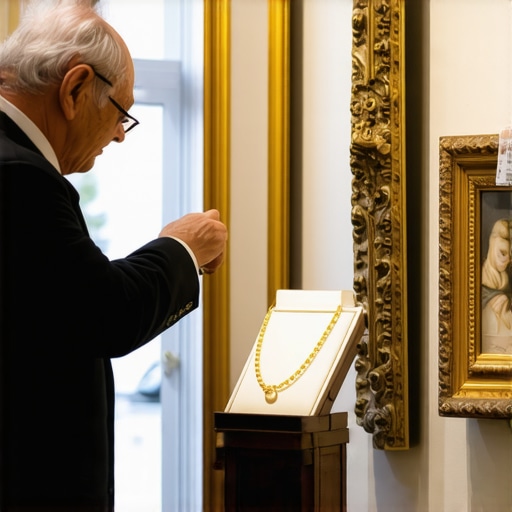
You are likely walking into a financial ambush if you assume your divorce lawyer understands the actual liquidation value of your private collection. The law does not care what you paid for a Cartier watch in 2015 or the emotional weight of a family heirloom. I recently spent 14 hours deconstructing a contract that was designed to be unreadable, only to find the one clause that changed everything regarding the valuation date of a client’s contemporary art portfolio. The document had been buried in a stack of discovery filings by a settlement mill firm that hoped we would just sign off on a generic replacement value estimate. If we had, the client would have lost nearly four hundred thousand dollars in the final distribution. This is the brutal reality of the courtroom. The evidence that wins is the evidence that survives a cross-examination. Most people entering a divorce are unprepared for the forensic scrutiny required to protect high-value assets. They rely on insurance riders or outdated retail receipts. That is a path to insolvency. In high-stakes litigation, an independent appraisal is not an option; it is a tactical necessity.
The hidden trap in sentimental valuation
In a divorce, an independent appraisal of jewelry and art provides the only admissible evidence of fair market value for the marital estate. Without a qualified appraiser, you risk equitable distribution errors that lead to significant financial loss during litigation or settlement negotiations. This is because courts look for liquidation value rather than replacement cost. Most individuals mistakenly believe their insurance policy reflects the money they will receive in a split. It does not. Insurance values are often inflated to cover retail replacement, whereas a divorce court seeks the price a willing buyer would pay a willing seller in an open market. This discrepancy can be thirty to fifty percent. If you accept the insurance value for your spouse’s portion of the estate while they take cash, you are effectively paying a premium for an asset you cannot liquidate for that same amount. The procedural mapping of your case must include a line-by-line audit of every appraisal methodology used by the opposing side. If their expert used a ‘comparable sales’ approach without accounting for the current volatility in the auction market, their entire report is vulnerable to a motion to strike. We look for these weaknesses. We look for the gaps in the provenance. The law is not about what you own; it is about what you can prove it is worth on the day the petition was filed.
“Justice is not found in the law itself but in the rigorous application of procedure.” – Common Law Maxim
Why your spouse wants a replacement value estimate
A divorce attorney representing the non-possessory spouse will often push for a replacement value appraisal because it artificially inflates the marital asset pool. By using retail market data instead of secondary market prices, the valuation report forces the possessor to ‘buy out’ the other party at a premium price. This is a common tactic used to offset other community property like 401k accounts or real equity. You must understand that the secondary market for diamonds and fine art is a specialized ecosystem. A GIA-certified diamond does not retain its retail markup the moment it leaves the showroom. If your lawyer is not demanding a Fair Market Value (FMV) assessment as defined by IRS Publication 561, they are failing you. The strategy here is simple. We leverage the Uniform Standards of Professional Appraisal Practice (USPAP) to discredit any report that relies on ‘asking prices’ from websites like 1stDibs or eBay. Real value is found in realized hammer prices at reputable auction houses. When the defense brings a generic jeweler to testify, we dismantle their credibility by highlighting their lack of forensic training. This is not about being nice. It is about the ROI of your litigation. You are paying for a result, not a friend in the courtroom. If you do not have a battle-tested appraisal, you are bringing a knife to a gunfight.[image]
The forensic reality of the discovery process
The discovery process in a high-net-worth divorce requires a forensic accountant and an independent appraiser to work in tandem to identify hidden assets. Frequently, art collections and luxury jewelry are used to launder marital funds or hide liquidity before a divorce filing. If you suspect your spouse has been ‘investing’ in collectibles, the burden of proof lies with you to establish the source of funds and the current valuation. We use subpoenas to track gallery invoices and private sale agreements. The paper trail is almost always there, but it requires the patience of a predator to find it. Case data from the field indicates that nearly twenty percent of high-value assets are undervalued in initial disclosures. The opposition will claim a painting is a ‘copy’ or that a piece of jewelry was a ‘gift’ from a third party to exempt it from the marital pot. These are lies. We counter these lies with chemical analysis of pigments and microscopic laser inspections of gemstones. Procedural zooming allows us to look at the exact phrasing of the appraisal’s ‘limiting conditions.’ Many appraisers include ‘boiler plate’ language that allows them to dodge liability if their valuation is wrong. We do not accept those reports. We demand absolute accountability. If an appraiser cannot stand up to a three-hour deposition regarding their specific methodology for valuing a 19th-century landscape, they have no business in your case.
“The lawyer’s duty is to the administration of justice, which includes the obligation to ensure that all evidence presented is both relevant and authenticated.” – American Bar Association Model Rules Commentary
How to disqualify a biased appraiser in court
To get a divorce with your financial integrity intact, you must be prepared to disqualify expert witnesses who exhibit valuation bias. A divorce lawyer must be skilled in Daubert challenges, which test whether an expert’s testimony is based on scientifically valid reasoning. If the appraiser hired by your spouse has a history of working exclusively for one firm, or if their valuation techniques deviate from industry standards, they can be barred from testifying. While most lawyers tell you to sue immediately, the strategic play is often the delayed demand letter to let the defendant’s insurance clock run out, or in the case of art, to wait for a specific auction season to establish a new price floor. This timing is everything. We look at the ‘Effective Date’ of the appraisal. If the market for a specific artist crashed three months ago, but the appraisal uses data from last year, it is useless. The court needs a snapshot of today. We also examine the ‘Scope of Work’ agreement between the appraiser and the hiring party. If the spouse told the appraiser to ‘keep it low,’ we find the correspondence. In the digital age, nothing is truly deleted. We find the emails. We find the text messages to the gallery owner. We turn the appraisal process into a liability for the opposition. If they submit a fraudulent or negligent valuation, we move for sanctions. The goal is to make it more expensive for them to lie than to tell the truth. Your art and jewelry are not just beautiful objects; they are chips on a table. We ensure those chips are counted correctly.